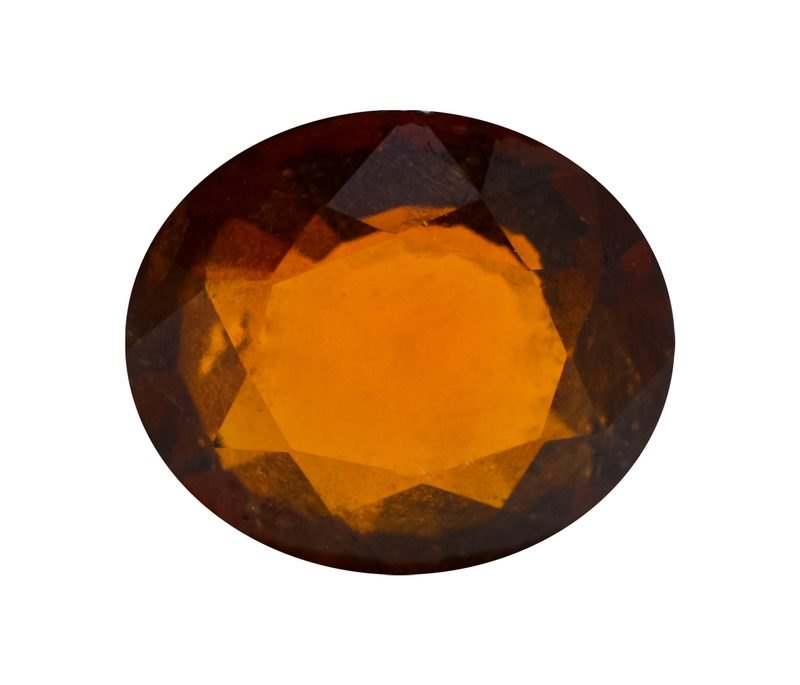
Hessonite
Born in metamorphic marble as grossular garnet, hessonite is the cinnamon-honey stone long known as the Vedic gomed for Rahu.
- Hessonite is called gomed in Vedic astrology and is associated with the lunar node Rahu.
- The stone's characteristic treacle inclusions make it easy to identify from other orange gems.
- Sri Lankan hessonite has been prized for Vedic use for more than 1,500 years.
- Hessonite's name comes from the Greek hesson, meaning lesser, referring to its lower density.
- Historical cinnamon stone and hyacinth trade names both referred to hessonite in European jewelry.
- Vedic astrology readers seeking gomed for Rahu remediation per jyotish prescription
- Collectors drawn to warm cinnamon and honey-orange gem colors with natural inclusions
- Practitioners working with grounding, career direction, and sacral chakra energy
- Readers wanting an affordable alternative to spessartine or orange sapphire
- Gift buyers for January birthdays or Aries and Leo birthday milestones
- Buyers wanting eye-clean flawless stones (hessonite typically shows treacle inclusions)
- Readers preferring cool tones (consider blue sapphire or amethyst)
- Shoppers who want ring-hardness of sapphire-level durability (try padparadscha)
What Is Hessonite?
Hessonite is a calcium aluminum silicate variety of grossular garnet, colored cinnamon to honey-orange by trace iron and manganese. The name comes from the Greek hesson, meaning inferior, a reference to its lower density compared to other garnets rather than any quality judgment. It rates 6.5 - 7.5 on the Mohs hardness scale.
Vedic astrological tradition calls hessonite gomed, literally cow's urine stone, from the distinctive warm honey-orange color.
At Mohs 6.5 to 7.5, hessonite is durable enough for most jewelry applications and is commonly faceted for rings, pendants, and earrings. The stone's refractive index of 1.730 to 1.750 gives good brilliance, though the characteristic treacle inclusions (swirls of liquid and crystalline material) often limit clarity compared to other faceted garnets.
These inclusions are diagnostic for hessonite and are accepted as part of the stone's character rather than a defect.
Commercial hessonite comes primarily from Sri Lanka (historic Ceylon), India, Madagascar, and Tanzania. Sri Lankan hessonite is the traditional source for Vedic jyotish use and remains the benchmark for color and clarity in premium gomed purchases.
The stone forms in metamorphic marble and skarn environments where calcium-aluminum silicates crystallize, often alongside wollastonite and diopside. Heat treatment is uncommon for hessonite because the natural color requires no enhancement.
How Hessonite Compares
| Property | Hessonite | Spessartine | Orange Sapphire |
|---|---|---|---|
| Hardness | 6.5 - 7.5 | 6.5 - 7.5 | 9 |
| Price / carat | $$ Mid-range | $$ Mid-range | $$$ Premium |
| Rarity | Moderate | Moderate | Rare |
| Best For | Vedic gomed, daily wear | Vivid orange statement | Fine jewelry investment |
Meaning and Symbolism
Hessonite has one of the deepest astrological traditions of any gem. In Vedic jyotish practice, hessonite is prescribed as the stone for Rahu, the north lunar node, one of the nine grahas (astrological influences) in the Indian system.
Wearers are traditionally advised to set gomed in silver and wear it on the middle finger of the right hand, with attention to specific timing, purification rituals, and periods of Rahu transit in their birth chart. This tradition is more than a thousand years old and remains widely practiced.
Beyond Vedic astrology, hessonite appears in historical European jewelry under trade names like cinnamon stone and hyacinth. Eighteenth and nineteenth century cabinet pieces often feature hessonite alongside other warm-colored stones, and Victorian mourning jewelry sometimes used the stone alongside jet and onyx.
The stone's distinctive treacle inclusions were documented and named in mineralogy texts of this period. In modern crystal healing tradition, hessonite is associated with overcoming obstacles, clear direction, and release of stagnant patterns.
Practitioners often describe it as a stone for readers facing career indecision or family drama that has become repetitive, and the Vedic connection to Rahu makes it a specific choice for navigating periods of change or uncertainty. Its warm color also connects it to creative momentum in modern practice.
Historical Timeline
Healing Tradition
Emotional
Practitioners believe hessonite is a stone of forward momentum, traditionally associated with releasing stuck patterns, accepting change, and finding clear direction after indecision. In crystal healing tradition, it is said to support readers navigating career transitions, family tensions that keep repeating, or the sense of being caught between options.
Many readers wear hessonite during periods of career decision or major life pivots, treating the ring or pendant as a tactile anchor for clarity. Practitioners often pair hessonite with citrine for confidence and with carnelian for creative drive.
Crystal workers typically describe hessonite as a steady, warm presence rather than a high-energy one, which suits readers who want reliable momentum rather than dramatic breakthroughs.
The Vedic association with Rahu also positions the stone as a support during shadow work and periods of unexpected change, with practitioners framing the stone as an ally for navigating uncertainty.
Spiritual
In crystal healing tradition, hessonite is linked with the sacral and solar plexus chakras, zones practitioners associate with creative flow and willpower. The stone's warm cinnamon-orange color is read as fire energy channeled into directed action.
Many readers incorporate hessonite into intention work around career changes, new projects, or resolving long-standing family patterns.
In Vedic jyotish tradition, hessonite is specifically prescribed as gomed for remediation of Rahu-related astrological transits. Practitioners working within this tradition consult with astrologers before wearing the stone, and the prescription includes specific timing, setting in silver, and ritual purification.
Modern crystal practice has adopted the stone's transformational symbolism more broadly. Hessonite pairs with clear quartz in amplification grids and with black tourmaline when transformational work needs grounded protection.
Physical
Practitioners believe hessonite is traditionally associated with digestive vitality, circulation, and what they describe as body detoxification. Folklore and some Vedic texts link the stone with recovery from prolonged stress, steady appetite, and physical resilience through demanding seasons, framed as supportive companionship rather than medical treatment.
Many readers wear hessonite as rings or pendants during recovery periods, though the stone is not a substitute for healthcare and practitioners consistently describe its role as accompanying rather than treating.
Some crystal workers also suggest hessonite for people working through body-mind patterns that feel stuck, such as habitual tension or repetitive minor discomforts. Vedic tradition includes specific physical associations tied to Rahu remediation, but these are prescribed through astrological consultation rather than general crystal practice.
Zodiac, Birthstone and Gifts
Hessonite is sometimes offered as a January alternative alongside traditional almandine garnet, and astrologers often pair it with fire signs Aries and Leo for the warm color, and with Capricorn for the Saturnine transformation associations.
In Vedic jyotish, hessonite is specifically prescribed as gomed for Rahu remediation, independent of Western zodiac categories. For Western astrology readers, practitioners sometimes pair hessonite with carnelian for Aries fire-projects and with citrine for Leo confidence work in zodiac kits.
Care and Cleansing
Hessonite is easy to maintain. Warm soapy water and a soft brush handle daily dust and body oils without risk, and the stone tolerates ultrasonic cleaning in unfractured form. Garnet is chemically stable and does not react to most household cleaners.
Fractured or heavily included stones should avoid ultrasonic and steam methods because vibration can propagate inclusions. Salt water should be avoided on set pieces because of metal mounting concerns.
Moonlight, sound cleansing with a singing bowl, and smoke cleansing with palo santo or sage are all traditional and safe. Many practitioners rest hessonite on selenite plates overnight as a gentle energetic reset. Dry salt cleansing for a few hours is acceptable but not necessary.
Ultraviolet fluorescence is weak to absent in hessonite.
Sunlight is fully tolerated and does not fade hessonite, so brief sun bathing is safe and sometimes described as a recharging practice by crystal workers. Vedic practitioners following jyotish tradition may have specific purification requirements before first wearing a prescribed gomed stone. Routine daily care follows standard fine-jewelry protocols.
- DO clean hessonite in warm soapy water with a soft brush regularly.
- DO NOT use ultrasonic cleaners on heavily included or fractured hessonite.
- DO store hessonite separately in a soft pouch to avoid scratches from harder stones.
- DO have prong settings inspected annually by a qualified jeweler.
- DO NOT subject hessonite to thermal shock by moving between hot and cold water.
- DO remove hessonite rings before heavy household or gardening work.
- Note: Vedic jyotish use requires astrological prescription and specific setting in silver.
Real vs Fake
Genuine hessonite shows a characteristic cinnamon to honey-orange color with internal treacle inclusions (swirls of liquid and crystalline material) visible under a 10x loupe. These inclusions are diagnostic for the stone and help distinguish it from other orange gems.
The stone's refractive index of 1.730 to 1.750 and specific gravity of 3.57 to 3.73 confirm identification in gemological testing.
Common imitations and confusions include orange citrine, heat-treated topaz, amber-colored glass, and spessartine garnet. Glass often shows curved gas bubbles and lacks the distinctive treacle inclusions. Citrine has different refractive behavior and lower density. Spessartine shows purer orange with less honey tone and typically higher refractive index.
For Vedic jyotish use, authentic Sri Lankan hessonite with a lab certificate is essential. Laboratory testing confirms natural garnet identity, specific gravity, and inclusion patterns. Reputable sellers disclose origin and any treatments (rare in hessonite). Buyers of gomed specifically should seek astrologer-approved sources and a GIA, Mindat, and USGS or recognized-lab certificate.
Hessonite Jewelry & Gifts
Hessonite spans a broad price range based on color, clarity, and origin. Commercial-grade hessonite typically costs $20 to $150 per carat in small sizes, mid-grade Sri Lankan or Madagascan stones run $150 to $500 per carat, and top-quality eye-clean large stones reach $500 to $1,500 per carat.
Vedic gomed specifically prescribed for jyotish use commands a premium when sourced from Sri Lanka with full origin documentation.
Treatment is uncommon in hessonite because the natural color requires no enhancement. For jewelry, focus on honey-orange color saturation first (overly brown or too yellow stones are less desirable), eye-clean clarity with characteristic treacle inclusions, and well-cut proportions for brilliance.
Ask reputable sellers whether a stone is natural untreated hessonite or synthetic garnet, and expect a lab certificate for significant purchases, especially Vedic-prescribed gomed.
Where to Buy Hessonite
Affiliate disclosure: Some links below earn us a small commission at no extra cost to you. See our affiliate disclosure page.
Handmade, raw, and tumbled pieces from independent sellers worldwide.
Shop Hessonite on Etsy →Accessories, tools, and specimen sets with fast Prime delivery.
Shop Hessonite on Amazon →Certified loose gemstones graded and photographed for online buyers.
Shop Hessonite on GemSelect →Pairs Well With



Where Hessonite Is Found


