Diopside
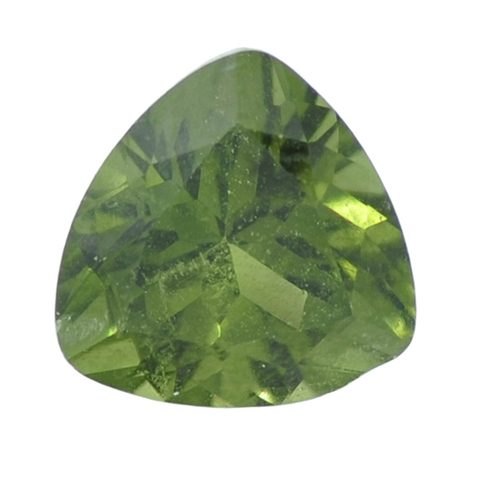
Affordable rich green pyroxene from Siberia, chrome diopside is sometimes called the everyday alternative to emerald.
- Chrome diopside is sometimes called Siberian emerald because of its emerald-rich green color and Russian Aldan region origin.
- Mining at the Inagli complex in eastern Siberia happens only during a short summer window because of extreme winter temperatures.
- The name diopside comes from the Greek words for twice and image, referring to the double refraction visible through the stone.
- Star diopside, a black variety with four-rayed asterism, occurs in southern India and is sometimes cut as cabochons for collectors.
- Chrome diopside almost never reaches sizes above five carats with clean clarity; large fine stones are disproportionately rare.
- Buyers wanting emerald-rich color at a fraction of the price
- Practitioners working with heart chakra renewal and emotional healing
- Pendant and earring shoppers who like vivid green stones in protective settings
- Collectors interested in Siberian gemstones with documented Russian provenance
- Gift givers looking for a unique May birthstone alternative for under $200
- Daily-wear ring buyers; chrome diopside's perfect cleavage and Mohs 5.5 to 6.5 hardness make rings risky
- Anyone seeking a hard daily-wear emerald substitute (consider tsavorite garnet or peridot)
- Buyers wanting large clean stones above 5 carats (rare and disproportionately expensive)
What Is Diopside?
Diopside is a calcium magnesium silicate in the pyroxene family, the same mineral group that includes jadeite. The species occurs in many colors including white, green, brown, and blue, but the gem trade focuses overwhelmingly on chrome diopside, the vivid green variety colored by trace chromium that gives it an emerald-like richness.
The IMA symbol for the species is Di. Diopside forms in metamorphosed limestone, peridotite, and ultramafic rocks where calcium-magnesium-rich systems crystallize at high temperature.
The famous green chrome diopside variety comes almost exclusively from the Inagli ultramafic complex near Aldan in eastern Siberia, Russia. The deposit was developed for commercial gem production in the 1980s and has supplied the global market since.
Other deposits in Pakistan, Italy, Madagascar, and Canada produce diopside, but Russian chrome diopside dominates faceted gem supply because of its consistent vivid color.
Diopside has a Mohs hardness of 5.5 to 6.5 and perfect cleavage in two directions, which makes it more vulnerable to chipping than harder gems. The stone is well suited to pendants, earrings, and protective bezel ring settings, but is not recommended for prong-set daily-wear engagement rings.
Star diopside, a black variety with four-rayed asterism, occurs in India and is sometimes cabbed for collectors. Most commercial chrome diopside is small, typically under three carats, since larger clean stones are rare and disproportionately expensive.
How Diopside Compares
| Property | Chrome Diopside | Emerald | Tsavorite Garnet |
|---|---|---|---|
| Hardness | 5.5 - 6.5 | 7.5 - 8 | 7 - 7.5 |
| Price / carat | $ Budget | $$$ Premium | $$$ Premium |
| Rarity | Uncommon | Common (with treatment) | Rare |
| Best For | Pendants, value seekers | Heirloom, investment | Daily wear, collectors |
Meaning and Symbolism
Diopside has carried associations with the natural world for centuries, with the name derived from the Greek dis (twice) and opsis (image), referring to the optical doubling visible through the stone.
The species was formally described in the early 1800s, but the green chrome diopside variety did not become commercially available until Russian sources were developed in the late twentieth century. Earlier traditions worked mainly with white and pale green diopside found in Italy and elsewhere.
Russian collectors call chrome diopside the Siberian emerald, a marketing name that emphasizes its rich green color while acknowledging its lower price point compared with true emerald. The stone became commercially significant in the 1980s when Soviet-era mining operations at the Inagli complex began exporting cut material.
Today the Aldan region remains the world's primary source, with mining limited to a short summer season because of the extreme Siberian climate.
In modern crystal practice, diopside is traditionally associated with the heart chakra and with reconnection to nature after long periods indoors or in stressful environments. Practitioners believe its forest-green color resonates with the renewing energy of growing things.
Many find chrome diopside useful as a meditation companion for grief work, especially the kind of slow-burning grief that benefits from gentle, patient support rather than dramatic catharsis.
Historical Timeline
Healing Tradition
Emotional
Practitioners believe chrome diopside is a stone of gentle heart healing and reconnection to the natural world. In crystal healing tradition, it is said to soothe the kind of low-grade emotional fatigue that comes from too much time indoors, too many screens, or too long in stressful environments.
Many find it useful during seasonal transitions, especially in late winter when readers feel disconnected from green growing things.
The stone has long been used in modern crystal practice for grief work, particularly slow-burning grief that benefits from steady, patient support rather than dramatic catharsis. Practitioners often pair chrome diopside with rose quartz when the work involves heart healing, or with clear quartz when amplified focus is needed.
Diopside is sometimes recommended for readers managing burnout from caregiving roles, with its gentle green color interpreted as a reminder to tend one's own heart with the same care given to others.
Spiritual
Chrome diopside is traditionally associated with the heart chakra in modern crystal practice. Practitioners believe its forest-green color resonates with the heart's natural rhythm of opening and closing, supporting steady emotional renewal rather than forced opening. It has long been recommended as a meditation companion for nature-based spiritual practice and earth-element work.
Many find chrome diopside useful in meditations focused on the natural world, especially work that involves connecting to forests, trees, or wild landscapes. The stone pairs well with moss agate for amplified nature work and with clear quartz for focused intention setting.
Practitioners often place chrome diopside on a windowsill near houseplants or on an outdoor altar to combine plant energy with crystal support, with the green color symbolism interpreted as a literal bridge between the mineral and plant kingdoms.
Physical
Practitioners believe chrome diopside supports what they describe as the body's heart and circulatory system, which crystal healing tradition associates with the heart chakra. In folklore, the stone is sometimes used for general physical recovery after illness or surgery.
It is also traditionally associated with the muscles and the kind of physical tension that comes from sustained stress.
Many find chrome diopside useful as a comfort companion during convalescence, with the stone often kept on a bedside table rather than worn during recovery. The green color is interpreted in modern crystal healing as supportive of cellular renewal and growth.
Diopside is not a substitute for medical care, and practitioners are careful to frame its role as supportive rather than curative. The stone is sometimes carried as a pocket talisman during seasonal allergies or respiratory work, though this is symbolic rather than clinically supported.
Zodiac, Birthstone and Gifts
Chrome diopside is most often associated with Virgo in modern crystal astrology because of its connection to earth, growth, and patient cultivation. Practitioners believe the stone supports Virgo's natural attention to the small, steady work of nurturing things into being.
It has long been suggested as a personal talisman for Virgos working in healing, agriculture, or service-oriented professions.
Pisces is the secondary association because of chrome diopside's gentle, water-edge character and its support for sensitive emotional work. Astrologers sometimes recommend the stone for Pisces readers seeking to ground their natural empathy in the stable, renewing energy of the earth element.
Care and Cleansing
Chrome diopside tolerates most gentle cleansing methods, though its cleavage and softer hardness require some care. Running cool tap water for under thirty seconds is safe for both loose and set stones, as is a brief rinse in lukewarm soapy water with a soft cloth to remove skin oils.
Avoid ultrasonic and steam cleaners, which can stress cleavage planes, and avoid hot water that could cause thermal shock.
Sunlight cleansing is safe for chrome diopside since the green color is stable. Moonlight, smoke from sage or palo santo, and sound cleansing with a singing bowl are all considered safe and well-aligned with the stone's gentle energy.
Avoid prolonged salt contact, which can dull polish and corrode metal settings. Many practitioners recharge chrome diopside by placing it on a clear quartz cluster or burying it briefly in fresh garden soil overnight.
- DO NOT use ultrasonic or steam cleaners on chrome diopside, since cleavage planes are sensitive.
- DO use bezel rather than prong settings for chrome diopside in ring jewelry.
- DO store separately from harder gems to prevent scratches.
- DO NOT subject chrome diopside to sudden temperature changes or impact.
- DO ask whether the stone is natural Russian Aldan material or another origin.
- DO remove ring jewelry before housework, gardening, or contact sports.
- Note: chrome diopside is rarely treated; suspicious low prices may indicate dyed glass substitutes.
Real vs Fake
Genuine chrome diopside shows rich emerald-green to forest-green color with strong dispersion and a refractive index of 1.664 to 1.730. Under magnification you may see characteristic inclusions such as fine crystal needles, fluid fingerprints, or growth tubes.
The stone shows visible double refraction when viewed through certain orientations, which is one of its diagnostic features. Real chrome diopside has a slightly oily luster characteristic of pyroxene-family minerals.
Common imitations include green glass, dyed quartz, and synthetic spinel sold as chrome diopside at low prices. A reputable independent gemological lab can confirm the species using refractive index and density measurements; chrome diopside has specific gravity 3.22 to 3.40 and characteristic absorption spectrum showing chromium lines.
Tsavorite garnet is sometimes confused with chrome diopside but has higher refractive index and different optical properties.
At home, look for the slightly oily luster of pyroxene minerals, the cool feel of true silicate stone, and natural inclusions visible under good light. Watch for stones priced below $20 per carat marketed as chrome diopside, since these are often green glass or dyed material.
Reputable sellers disclose the country of origin (almost always Russia for fine chrome diopside) and any treatments. Synthetic chrome diopside is rare in the trade because the stone is already inexpensive, so substitution is the more common concern.
Diopside Jewelry & Gifts
Chrome diopside is one of the best value green gemstones on the market. Standard commercial stones in calibrated sizes run $25 to $80 per carat in pieces under two carats, and stones from two to five carats with strong color reach $80 to $200 per carat.
Exceptional clean stones above five carats are rare and disproportionately expensive, sometimes exceeding $300 per carat. Star diopside cabochons are priced separately and typically run $30 to $150 depending on size and asterism quality.
Chrome diopside is rarely treated, which is one of its appeals as an honest natural stone. Reputable sellers disclose origin (almost always Russian Aldan region for fine material) and confirm the stone is natural and untreated. Watch for green glass and dyed substitutes at suspiciously low prices.
For jewelry, pendant and earring settings are the most practical given the stone's softer hardness and cleavage. chrome diopside remains an under-collected gem relative to its color quality, which makes it an excellent value for buyers seeking emerald-rich green at affordable prices.
Where to Buy Diopside
Affiliate disclosure: Some links below earn us a small commission at no extra cost to you. See our affiliate disclosure page.
Handmade, raw, and tumbled pieces from independent sellers worldwide.
Shop Diopside on Etsy →Accessories, tools, and specimen sets with fast Prime delivery.
Shop Diopside on Amazon →Certified loose gemstones graded and photographed for online buyers.
Shop Diopside on GemSelect →Pairs Well With



Where Diopside Is Found


