
Star Diopside
Deep black diopside with a glowing 4-rayed silver star that appears to float just beneath the surface
- Star diopside shows a 4-rayed star rather than the 6-rayed star of most star gems because diopside's monoclinic crystal structure creates only 2 crossing inclusion orientations rather than 3.
- The natural asymmetry of a star diopside's rays - slightly uneven or off-center - is actually a sign of authenticity; perfect symmetric stars suggest synthetic material or glass.
- Diopside is one of the minerals found in certain meteorites, giving the species a literal connection to stellar origins beyond Earth.
- India's Tamil Nadu region supplies approximately 95% of the world's commercial star diopside, from deposits that have been worked for hundreds of years.
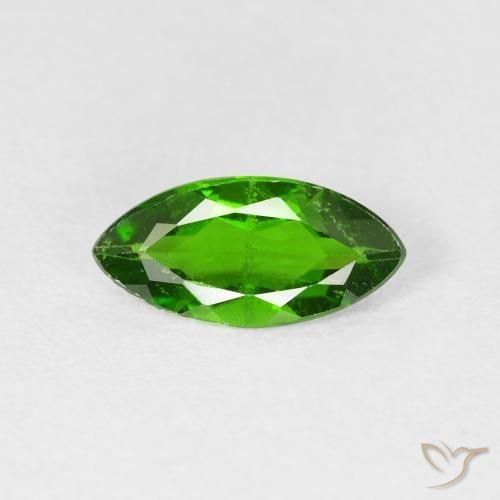
- The chrome diopside variety from Russia is a vivid emerald-green gem (a different variety from star diopside) - both are the same mineral species with dramatically different appearances.
- Star gemstone collectors seeking unusual species
- Grounding, root chakra, and earth energy work
- Affordable alternatives to black star sapphire
- Dramatic dark jewelry with celestial symbolism
- Mineral collectors interested in diopside's pyroxene family
- Everyday high-impact ring wear (choose black star sapphire for maximum durability)
- Those wanting the sharpest possible star (black star sapphire shows finer rays)
- Anyone expecting faceted brilliance (star diopside is always cut as a cabochon)
What Is Star Diopside?
Star Diopside is a variety of the pyroxene mineral diopside that displays asterism - a 4-rayed star that appears to float across the polished cabochon surface under a single-point light source. It rates 5.5 - 6.5 on the Mohs hardness scale.
The star results from densely packed parallel magnetite or ilmenite needle inclusions oriented in 2 crossing directions, which reflect light into 2 bands that cross at 90 degrees, forming the distinctive 4-rayed star.
India's Tamil Nadu state is the world's primary source, where star diopside has been mined for centuries. The stone's near-black body color and glowing white star create a dramatic celestial appearance on a dark ground - visually similar to black star sapphire but far more affordable.
Unlike most star gems which show 6-rayed stars (hexagonal crystal systems), star diopside shows a 4-rayed star due to its monoclinic crystal structure. This 4-rayed star is sometimes slightly off-center and asymmetric - a feature that distinguishes natural star diopside from synthetics.
How Star Diopside Compares
| Property | Star Diopside | Black Star Sapphire | Black Star Spinel |
|---|---|---|---|
| Hardness | 5.5 - 6.5 | 9 | 8 |
| Price/ct | $ Budget | $$ Mid-range | $ Budget |
| Star Shape | 4-rayed | 6-rayed | 6-rayed |
| Best For | Affordable star gem | Durable star jewelry | Rare collector gem |
Meaning and Symbolism
Star Diopside is traditionally associated with deep grounding, connection to the earth's core energy, and the kind of practical wisdom that comes from being fully present in physical reality. Practitioners believe it anchors scattered or anxious energy directly to the earth, providing stability without heaviness.
The 4-rayed star is symbolically linked to the four directions, four elements, and the sacred geometry of the cross - associations that span multiple cultural traditions. Crystal workers sometimes use star diopside to represent balance and stability at the center of a practice or meditation space.
In some traditions, star diopside is thought to carry connection to ancestral or deep earth memory - the accumulated wisdom held in stone across geological time. It is said to support those doing lineage healing or ancestral connection work.
Historical Timeline
Healing Tradition
Emotional
Star Diopside is traditionally associated with emotional grounding and the ability to meet difficult feelings from a place of deep stability rather than reactive anxiety. Practitioners believe it helps people who feel emotionally destabilized or overwhelmed reconnect with a sense of inner solidity and presence.
It is said to be particularly helpful for those prone to dissociation or emotional flooding, providing an anchor in the physical body. The 4-rayed star is thought to hold the bearer in the center point between opposing emotional pulls, supporting equanimity.
Spiritual
Spiritually, star diopside is thought to support earth-based spiritual practices and the cultivation of presence in physical reality rather than spiritual bypassing. Practitioners sometimes describe it as a stone that helps the bearer be fully incarnated - bringing spiritual awareness into the body rather than escaping the body into spiritual realms.
The star phenomenon is symbolically linked to guidance from above meeting earth below - heaven and earth united in physical stone. Some traditions use it in ancestral connection work, believing its deep earth energy accesses collective ancestral memory.
Physical
Star diopside is traditionally associated with the physical body's connection to the earth in crystal healing frameworks - particularly the legs, feet, and skeletal system that literally support the body's standing in physical reality.
Some practitioners suggest it for people experiencing chronic physical fatigue or adrenal exhaustion, describing it as a stone that draws earth energy upward to replenish depleted physical systems. It is also sometimes linked to reproductive and pelvic health in folk traditions.
These are traditional beliefs only; star diopside is not a medical treatment.
Zodiac, Birthstone and Gifts
Pisces, a sign that can struggle with groundedness, is thought to benefit significantly from star diopside's earthing energy, which helps anchor the sign's naturally fluid spiritual awareness in physical reality. Gemini benefits from the stone's centering quality, which can help the dual-natured sign find a stable perspective amid competing thoughts and directions.
Virgo, an earth sign with natural practical wisdom, resonates with star diopside's grounding and ancestral memory associations, which deepen Virgo's connection to embodied intelligence.
Care and Cleansing
Burying star diopside in dry earth or placing it in a pot of soil overnight is the most resonant cleansing method given its deep earth element associations. Sound cleansing with a drum, singing bowl, or deep bass frequency is particularly appropriate for star diopside's grounding and earth energy.
A brief rinse under cool running water followed by immediate drying is acceptable; avoid prolonged soaking or salt water which can affect diopside's surface at its moderate Mohs hardness.
- DO store star diopside separately from harder stones like topaz, corundum, and quartz that can scratch its 5.5 to 6.5 Mohs surface.
- DO NOT use ultrasonic or steam cleaners as diopside has imperfect cleavage and can be sensitive to vibration and thermal shock.
- DO NOT use in high-impact settings like everyday rings without a protective bezel; the softer surface scratches with regular wear.
- NOTE that star diopside's star asymmetry is natural and desirable - stones with perfectly symmetric stars should be viewed with skepticism.
- DO NOT expose to salt water or harsh acidic cleaners that can etch the polished surface.
Real vs Fake
Genuine star diopside shows a 4-rayed star (not 6 rays) that is slightly asymmetric or irregular - this natural imperfection is the key authenticity indicator.
A perfectly symmetric 4-rayed star in a jet-black stone suggests glass or synthetic material; natural star diopside stars are almost always slightly off-center or uneven in ray brightness.
Black star sapphire shows 6 rays and tests at Mohs 9; star diopside shows 4 rays and tests at 5.5 to 6.5 - a simple hardness test distinguishes them. Diopside's RI of 1.664 to 1.730 is measurable with a refractometer and distinguishes it from glass imitations and other black star gem species.
Under magnification, genuine star diopside shows the fine parallel magnetite or ilmenite needles responsible for asterism - their natural irregular distribution confirms natural origin.
Star Diopside Jewelry & Gifts
Star diopside is among the most affordable star gems available; expect $3 to $30 per carat, with the sharpest, most centered stars and deepest black body color commanding higher prices.
The primary value factor is the sharpness and centering of the star: look for four clear, distinct rays that meet cleanly at the center of the dome under a single point light.
India's Tamil Nadu region supplies essentially all commercial star diopside; stones labeled as from this origin are the reliable commercial standard.
Star diopside is widely available in silver jewelry settings at accessible price points; look for bezel or protected settings that guard its softer surface during wear.
For collectors: larger sizes (above 5 carats) showing a sharp, well-centered star and deep black color are significantly rarer and worth seeking out at gem shows.
Where to Buy Star Diopside
Affiliate disclosure: Some links below earn us a small commission at no extra cost to you. See our affiliate disclosure page.
Handmade, raw, and tumbled pieces from independent sellers worldwide.
Shop Star Diopside on Etsy →Accessories, tools, and specimen sets with fast Prime delivery.
Shop Star Diopside on Amazon →Certified loose gemstones graded and photographed for online buyers.
Shop Star Diopside on GemSelect →Pairs Well With


Where Star Diopside Is Found


