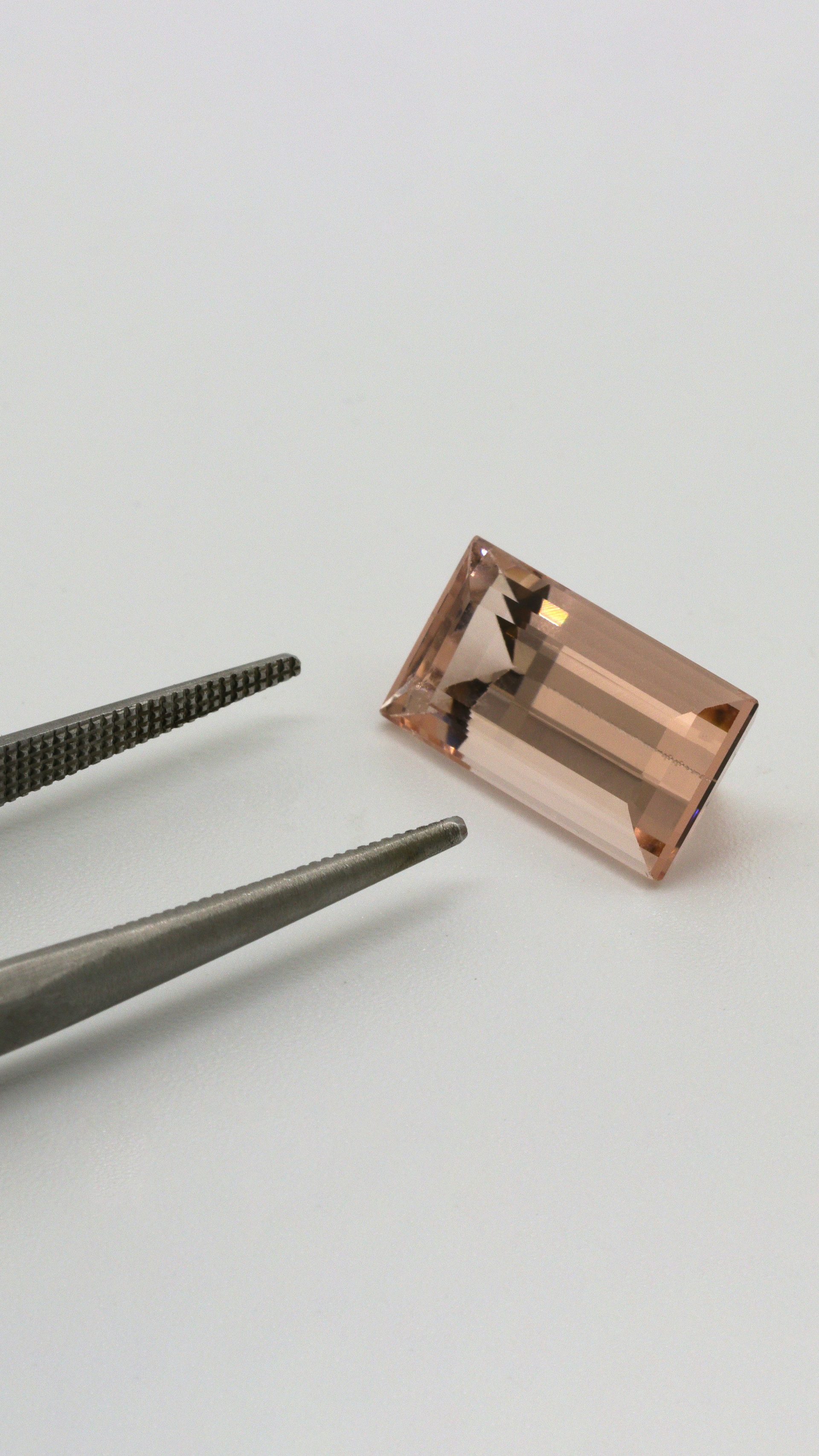
Lab Morganite
Grown in laboratories with the same beryl chemistry as mined morganite, lab morganite delivers signature peach-pink brilliance at.
- Morganite belongs to the same beryl family as emerald, aquamarine, and heliodor - all colored by different trace elements.
- Lab morganite typically achieves lighter, more consistent peach-pink tones than most natural specimens, which often trend toward orange-peach.
- J.P. Morgan donated significant gem collections to the American Museum of Natural History, which still bears his name in its gem halls.
- Pink beryl was occasionally called rose beryl or cesian beryl before morganite became the accepted trade name.
- Manganese concentrations as small as 0.1 to 0.5 percent are enough to produce morganite's characteristic peach-pink color.
- Engagement ring shoppers wanting peach-pink color with excellent durability at lower cost
- Rose gold jewelry lovers seeking a complementary soft-pink center stone
- Eco-conscious buyers preferring mining-free gemstones
- Gift givers looking for a romantic pink stone under $200
- Collectors wanting inclusion-free specimens not typically found in natural morganite
- Investors seeking resale value - lab stones carry no provenance premium
- Collectors requiring natural California or Brazilian origin documentation
- Buyers who specifically want the peachy-orange depth found in top Afghani natural morganite
What Is Lab Morganite?
Lab morganite is a laboratory-created variety of beryl - the same mineral family as emerald and aquamarine. Its chemical formula is beryllium aluminum silicate (Be₃Al₂Si₆O₁₈), colored pink to peach by manganese ions. Hydrothermal growth in pressurized autoclaves produces gem-quality crystals with the same hexagonal structure, refractive index, and hardness as natural morganite.
Natural morganite was first described in 1910 from a California deposit and named after financier and gem collector J.P. Morgan. Lab-created morganite reproduces the same manganese-driven color chemistry that occurs naturally in granite pegmatite environments.
The resulting stone ranges from very pale blush to medium peach-pink, depending on manganese concentration introduced during synthesis.
The FTC classifies lab morganite as a laboratory-created beryl variety, requiring disclosure in all US retail sales. Unlike colored glass or cubic zirconia simulants, lab morganite is genuinely beryl - it scratches glass, resists household chemicals, and exhibits the same birefringence as natural specimens.
At Mohs 7.5 to 8, it is harder than amethyst and suitable for everyday jewelry including rings.
Lab Morganite vs Natural Morganite vs Rose Quartz
| Property | Lab Morganite | Natural Morganite | Rose Quartz |
|---|---|---|---|
| Chemistry | Be₃Al₂Si₆O₁₈ (identical) | Be₃Al₂Si₆O₁₈ | SiO₂ |
| Hardness | 7.5 - 8 | 7.5 - 8 | 7 |
| Price / carat | $ Budget | $$ Mid-range | $ Budget |
| Clarity | Excellent (few inclusions) | Variable | Typically cloudy |
| Best For | Everyday rings, gifts | Collector pieces | Crystal work, casual wear |
Meaning and Symbolism
Morganite entered the gem world in 1910, named to honor J.P. Morgan's significant contributions to gemology and natural history. Within just a few decades it became associated with divine love, compassion, and the gentle opening of the heart.
Many practitioners believe lab morganite carries these same associations, since the stone's color and crystal structure - the foundations of its energetic identity - are chemically identical.
The soft peach-pink tone of morganite has long been linked to unconditional love, tenderness, and emotional healing across multiple crystal healing traditions. Practitioners describe it as a stone of angelic love - a phrase that appears in numerous crystal reference texts from the late 20th century onward.
Is said to create a gentle but persistent invitation to release emotional wounds and embrace vulnerability.
In the modern jewelry market, morganite - both natural and lab-created - has become particularly popular for engagement rings as an alternative to diamond, symbolizing a partnership built on warmth and authentic emotion rather than convention.
Lab morganite brings that symbolism within reach for couples who prioritize meaning and aesthetics over traditional gem hierarchy.
Historical Timeline
Healing Tradition
Emotional
Practitioners believe lab morganite carries the same heart-opening energy as natural morganite, supporting emotional healing and the gentle release of past wounds. Many who work with crystals find it helpful during periods of grief, heartbreak, or difficult emotional transitions.
Is said to soften the emotional armor people build after loss, encouraging a more open and receptive state. Crystal healing guides frequently recommend morganite for anyone navigating relationship changes, describing it as a companion for rebuilding trust - in others and in oneself.
Spiritual
In crystal healing tradition, lab morganite is associated with the Heart chakra and the energy of unconditional, angelic love. Practitioners believe it helps attune the user to divine compassion - a sense of being held and supported by a loving universe.
Is said to enhance empathy and deepen the capacity for meaningful connection during meditation or prayer. Some spiritual practitioners place morganite at the heart center during bodywork sessions, describing it as a stone that gently dissolves spiritual barriers without force or urgency.
Physical
While gemstones are not substitutes for medical care, practitioners traditionally associate morganite with gentle support for the heart and nervous system. Many find holding or wearing lab morganite helps them become more aware of physical tension patterns, particularly in the chest and shoulders.
Is said to encourage slow, deep breathing when used in mindfulness practices. In traditional crystal wellness, it has been linked to stress reduction - not through sedation but through a felt sense of being loved and safe that practitioners describe as a physical as well as emotional experience.
Zodiac, Birthstone and Gifts
Morganite is most often associated with Pisces and Cancer - the two most emotionally intuitive water signs of the zodiac. Pisces, known for deep empathy and creative sensitivity, is said to resonate with morganite's gentle heart-centered energy.
Cancer, the nurturing sign associated with home and family bonds, is linked to morganite's traditional symbolism of unconditional love and emotional protection.
Lab morganite makes a thoughtful gift for Cancer (June 21 - July 22) and Pisces (February 19 - March 20) birthdays, especially set in rose gold which amplifies the stone's warm peach-pink tones.
Many astrology enthusiasts choose lab morganite specifically because its consistently beautiful color makes for more impressive jewelry than many natural specimens at the same price point.
Care and Cleansing
Lab morganite is stable and easy to cleanse. Brief rinsing under cool running water is safe and effective for removing surface energy. Unlike amethyst, morganite's manganese-based color is stable in sunlight, so brief sun cleansing is an option - though long exposure is always avoided as a precaution with any gemstone.
Moonlight cleansing under a full moon is a popular and risk-free method for morganite, especially for stones used in love or emotional healing work. Placing lab morganite on a selenite charging plate overnight is equally effective and requires no special timing.
Sound cleansing with a bowl or bell is safe and particularly well-suited to group or ceremonial settings.
- DO store lab morganite away from harder gems like sapphire and diamond that can scratch its surface.
- DO clean with mild soap and lukewarm water; a soft brush removes buildup from ring settings without risk.
- DO NOT use ultrasonic cleaners if the stone has any surface-reaching fractures or is set with adhesive.
- DO NOT expose to household bleach or harsh alkaline cleaners - beryl is mildly sensitive to strong alkalis.
- DO remove morganite rings before heavy manual labor or activities that risk impact damage.
- DO check ring settings periodically - the stone's slick surface means prongs can shift more easily than with rougher gems.
Real vs Fake
Distinguishing lab morganite from natural morganite requires either seller disclosure or laboratory testing - both are genuine beryl. To confirm you have real beryl rather than an imitation, test hardness: morganite scratches glass easily and will not be scratched by a steel file.
Pink glass and pink cubic zirconia are common simulants; glass scratches at Mohs 5 to 6, and cubic zirconia shows a distinctly different refractive index under a loupe.
Under magnification, lab morganite is characteristically clean - very few inclusions. Natural morganite often shows parallel growth tubes, two-phase inclusions, or small fractures. A stone marketed as natural morganite that is completely flawless at an unusually low price is very likely lab-grown, which is not a problem unless misrepresented.
Ask your seller directly; legitimate retailers will confirm origin without hesitation.
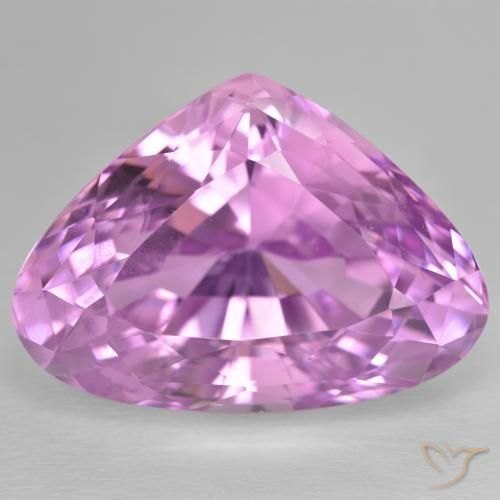
Pink quartz, rose quartz, or kunzite are sometimes sold alongside morganite and can cause confusion. Morganite's distinctly peachy-pink hue - warmer than rose quartz and less purple than kunzite - is a useful starting guide.
Under a refractometer, morganite shows a distinctive double refraction reading of 1.572 to 1.600, clearly distinguishable from single-refracting pink glass or cubic zirconia.
Lab Morganite Jewelry & Gifts
Lab morganite typically sells for $20 to $80 per carat in faceted grade, making it significantly more affordable than natural morganite of equivalent color, which often runs $50 to $300 or more per carat for clean, well-saturated specimens.
Size is a major advantage with lab stones - a 10-carat lab morganite costs a fraction of a comparable natural stone.
Color saturation matters most. Look for medium peach-pink with warm undertones rather than very pale blush, which reads washed out in jewelry. Cut quality affects brilliance significantly in morganite - well-cut oval and cushion shapes maximize color return.
Always confirm the listing says laboratory-created or hydrothermal and ask for origin documentation if investing in a fine-jewelry piece.
Where to Buy Lab Morganite
Affiliate disclosure: Some links below earn us a small commission at no extra cost to you. See our affiliate disclosure page.
Handmade, raw, and tumbled pieces from independent sellers worldwide.
Shop Lab Morganite on Etsy →Accessories, tools, and specimen sets with fast Prime delivery.
Shop Lab Morganite on Amazon →Certified loose gemstones graded and photographed for online buyers.
Shop Lab Morganite on GemSelect →Pairs Well With


Where Lab Morganite Is Found

