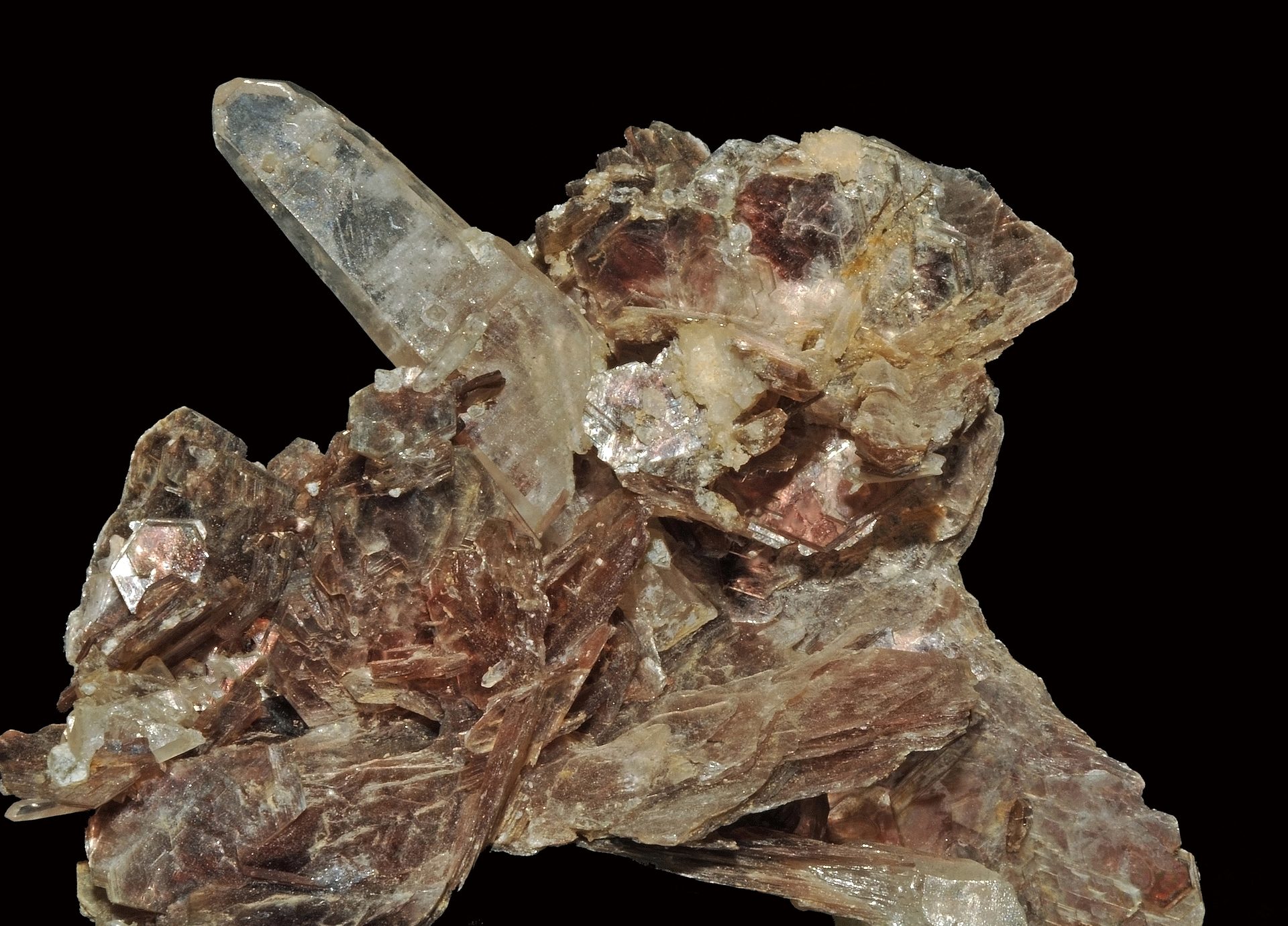
Lepidolite Mica
Lepidolite mica is the shimmering lavender sheet mineral whose lithium content has made it the go-to stone for anxiety and emotional.
- Lepidolite is a genuine source of lithium metal - the same element used in lithium-ion batteries and pharmaceutical mood stabilizers.
- The mica crystal structure of lepidolite allows sheets to peel away in paper-thin layers - some specimens can be separated into sheets finer than paper.
- Brazil's Minas Gerais state produces lepidolite alongside some of the world's finest tourmaline and aquamarine in the same pegmatite formations.
- Lepidolite's pearlescent shimmer comes from light reflecting off thousands of aligned mica cleavage planes simultaneously.
- Some lepidolite specimens contain tiny inclusions of tourmaline, rubellite (pink tourmaline), or quartz - making them prized combination stones.
- Those seeking gentle support for anxiety, stress, and emotional overwhelm through crystal healing practice
- Practitioners wanting a calming stone for the Heart and Third Eye chakras with a soft, feminine energy
- Anyone drawn to the unique sparkle and lavender-lilac color that distinguishes lepidolite from other purple stones
- Collectors interested in the mica mineral family and the geology of lithium-bearing pegmatites
- Those recovering from emotional upheaval, transitions, or periods of intense stress who need soothing energy
- Those wanting a durable everyday gemstone - lepidolite is soft (Mohs 2.5-3) and scratches easily
- Those seeking a deep royal purple stone - lepidolite ranges from lilac to lavender, rarely reaching intense purple like amethyst
- Anyone wanting water-based crystal practices - lepidolite's mica structure is damaged by extended water exposure
What Is Lepidolite Mica?
Lepidolite is a lithium-bearing mica mineral with the formula K(Li,Al)₃(AlSi₃)O₁₀(OH,F)₂. It belongs to the phyllosilicate group, forming in thin flexible sheets that cleave parallel to the basal plane - the characteristic mica cleavage that produces the pearlescent flash. It rates 2.5 - 3 on the Mohs hardness scale.
Color ranges from pale lilac and lavender to soft pink and occasionally yellowish-gray, depending on the iron and manganese content.
Lepidolite forms primarily in granitic pegmatites - coarse-grained igneous rocks where the late-stage crystallization of lithium-rich fluids produces large, well-formed mineral crystals. It frequently occurs alongside tourmaline (especially pink elbaite), quartz, feldspar, columbite, and other pegmatite minerals.
Mohs hardness of 2.5-3 makes lepidolite quite soft, and the perfect basal cleavage means it should be handled carefully to avoid flaking.
The lithium content of lepidolite (approximately 3-4% Li₂O) is significant both geologically and in crystal healing tradition. Lepidolite is a minor ore of lithium, and lithium-rich pegmatites are commercially mined for lithium used in batteries and ceramics.
In metaphysical practice, the lithium content is often cited as the basis for lepidolite's reputation as a calming, anxiety-reducing stone - paralleling lithium carbonate's pharmaceutical use in mood stabilization.
How Lepidolite Mica Compares
| Property | Lepidolite Mica | Amethyst | Charoite |
|---|---|---|---|
| Formula | K(Li,Al)₃(AlSi₃)O₁₀(OH,F)₂ | SiO₂ | Complex K-Ca silicate |
| Hardness | 2.5 - 3 | 7 | 5 - 6 |
| Special Feature | Lithium-bearing, pearlescent | Quartz, abundant, purple | Rare Siberian swirl pattern |
| Best For | Anxiety, gentle calming | Intuition, daily wear | Transformation, rare collector |
Meaning and Symbolism
Lepidolite's name comes from the Greek *lepis* (scale) referring to its scaly, platy mica appearance. It was first formally described in 1792 by Martin Heinrich Klaproth, who named it *lilalite* for its lilac color before the current name was established.
In the 19th century, lepidolite was primarily known as a mineralogical curiosity from pegmatite deposits - its practical significance as a lithium source became clear only in the 20th century.
In contemporary crystal healing, lepidolite has emerged as one of the most popular anxiety and stress support stones. The parallel to lithium's pharmaceutical applications in mood stabilization has been embraced by practitioners who frame lepidolite as the gentle, natural counterpart to medical lithium treatment - while being clear that crystal work is not a medical substitute.
The stone is consistently described as softening, soothing, and unwinding rather than stimulating or activating.
Practitioners believe Lepidolite is associated with the Air and Water elements - its mica shimmer evoking light on water, its softness evoking gentle breeze rather than storm. Practitioners who work with it describe an energy of graceful release, the settling of turbulence into calm, and the restoration of perspective after emotional overwhelm.
It is considered especially supportive during life transitions, grief, and recovery from burnout.
Historical Timeline
Healing Tradition
Emotional
Lepidolite is perhaps the most widely recommended stone for anxiety, stress, and emotional turbulence in the crystal healing community. Practitioners describe it as softening the edges of panic and worry, bringing a quality of gentle spaciousness to overwhelming feelings.
Many find it particularly helpful for anxiety that disrupts sleep, racing thoughts, and the emotional exhaustion of prolonged stress. Holding lepidolite or placing it on the Heart or forehead during rest is said to quiet the nervous system's stress response.
It is not a sedative but a soother - helping find calm without numbing.
Spiritual
In spiritual practice, lepidolite is associated with the graceful navigation of transition and change. Practitioners connect its Water and Air elemental nature to the fluid movement through life phases that might otherwise feel destabilizing. It is said to support trust in the process of transformation - the understanding that dissolution precedes renewal.
Third Eye and Crown associations link it to higher perspective: the view from above the chaos rather than within it. Lepidolite is often used in meditation during life transitions including career changes, relationship endings, grief, and spiritual awakening.
Physical
Crystal healing practitioners use lepidolite for its associations with the nervous system, sleep support, and the physical manifestations of stress. Placing lepidolite under the pillow or on the nightstand is said by many to support restful sleep and reduce anxious dreaming.
Some practitioners associate it with neuralgia and nerve-related discomfort. As always, these are practitioner traditions and experiential accounts; lepidolite is not a medical treatment and should not replace professional care for anxiety disorders.
Zodiac, Birthstone and Gifts
Lepidolite's themes of balance, grace, and the restoration of harmony connect it closely to Libra in crystal healing tradition - the sign most associated with equilibrium, beauty, and the resolution of discord. Pisces resonates with lepidolite's Water element associations and its capacity for deep emotional attunement and compassionate release.
Capricorn benefits from lepidolite's stress-softening energy - a counterbalance for the sign's tendency toward overwork and emotional suppression. All three signs find lepidolite valuable for emotional regulation and the cultivation of inner peace.
Care and Cleansing
Lepidolite requires gentle cleansing given its low hardness and mica structure. Moonlight is the preferred method and is completely safe - place on a windowsill or outside overnight during any phase, with full moon being traditional. Sound cleansing with a singing bowl is excellent and does not risk physical damage.
Selenite charging plates are widely used for lepidolite.
Avoid prolonged water exposure - brief rinsing is acceptable but soaking can delaminate mica sheets and cause surface damage over time. Avoid salt - dry salt and salt water both risk damaging the delicate cleavage surfaces. Direct sunlight over many hours may gradually fade the color.
Smudging is safe when done gently; avoid directing concentrated smoke or heat at the stone.
- DO NOT soak in water or use salt cleansing - mica structure is vulnerable to delamination with extended moisture or salt exposure.
- DO NOT expose to prolonged direct sunlight - color may gradually fade with extended UV exposure.
- DO handle gently - Mohs hardness of 2.5-3 means lepidolite scratches from contact with most other stones and hard surfaces.
- DO store separately or in soft pouches - contact with quartz, amethyst, or other harder stones will scratch lepidolite surfaces.
- DO NOT use in ultrasonic or steam cleaners - the cleavage planes will delaminate under vibration or heat.
- NOTE: The mica sheets can flake; avoid pressing too hard on mica surfaces when handling.
Real vs Fake
The main authenticity concern with lepidolite is distinguishing it from dyed or simulated materials, and from other purple mica minerals. Genuine lepidolite has a characteristic pearlescent sheen from mica cleavage planes - this cannot be replicated by dyed rock or glass.
The scaly, platy texture visible under magnification and the ability to scratch the surface with a fingernail (Mohs 2.5-3) are distinguishing features.
Lepidolite sold in massive form (not showing mica structure) may sometimes be misidentified or mixed with quartzite or other materials dyed purple. Genuine massive lepidolite shows mica shimmer throughout and has relatively low specific gravity (~2.8-2.9). Amethyst is harder (Mohs 7) and has no mica shimmer.
Ask dealers specifically whether specimens are natural color or treated - lepidolite is rarely dyed but confusion with other minerals is possible.
Lepidolite Mica Jewelry & Gifts
Small tumbled lepidolite pieces begin around $3-$8 for modest specimens. Quality tumbled stones with good lavender color and visible mica shimmer run $8-$20. Natural matrix specimens showing mica sheets on quartz or feldspar start at $15-$40.
Larger display clusters or lepidolite with pink tourmaline inclusions can reach $60-$200+ depending on size and crystal quality. Brazilian Minas Gerais material is generally the most available and best value.
Color intensity and mica shimmer are the primary value drivers. Richer lavender-purple specimens are more desirable than pale lilac or pinkish pieces. Specimens showing both lepidolite mica and pink tourmaline inclusions command premium as combination stones. Ensure specimens are natural color - lepidolite is rarely dyed, but verify with reputable dealers.
Madagascar produces fine material that competes with Brazilian quality at similar price points.
Where to Buy Lepidolite Mica
Affiliate disclosure: Some links below earn us a small commission at no extra cost to you. See our affiliate disclosure page.
Handmade, raw, and tumbled pieces from independent sellers worldwide.
Shop Lepidolite Mica on Etsy →Accessories, tools, and specimen sets with fast Prime delivery.
Shop Lepidolite Mica on Amazon →Certified loose gemstones graded and photographed for online buyers.
Shop Lepidolite Mica on GemSelect →Pairs Well With




Where Lepidolite Mica Is Found


