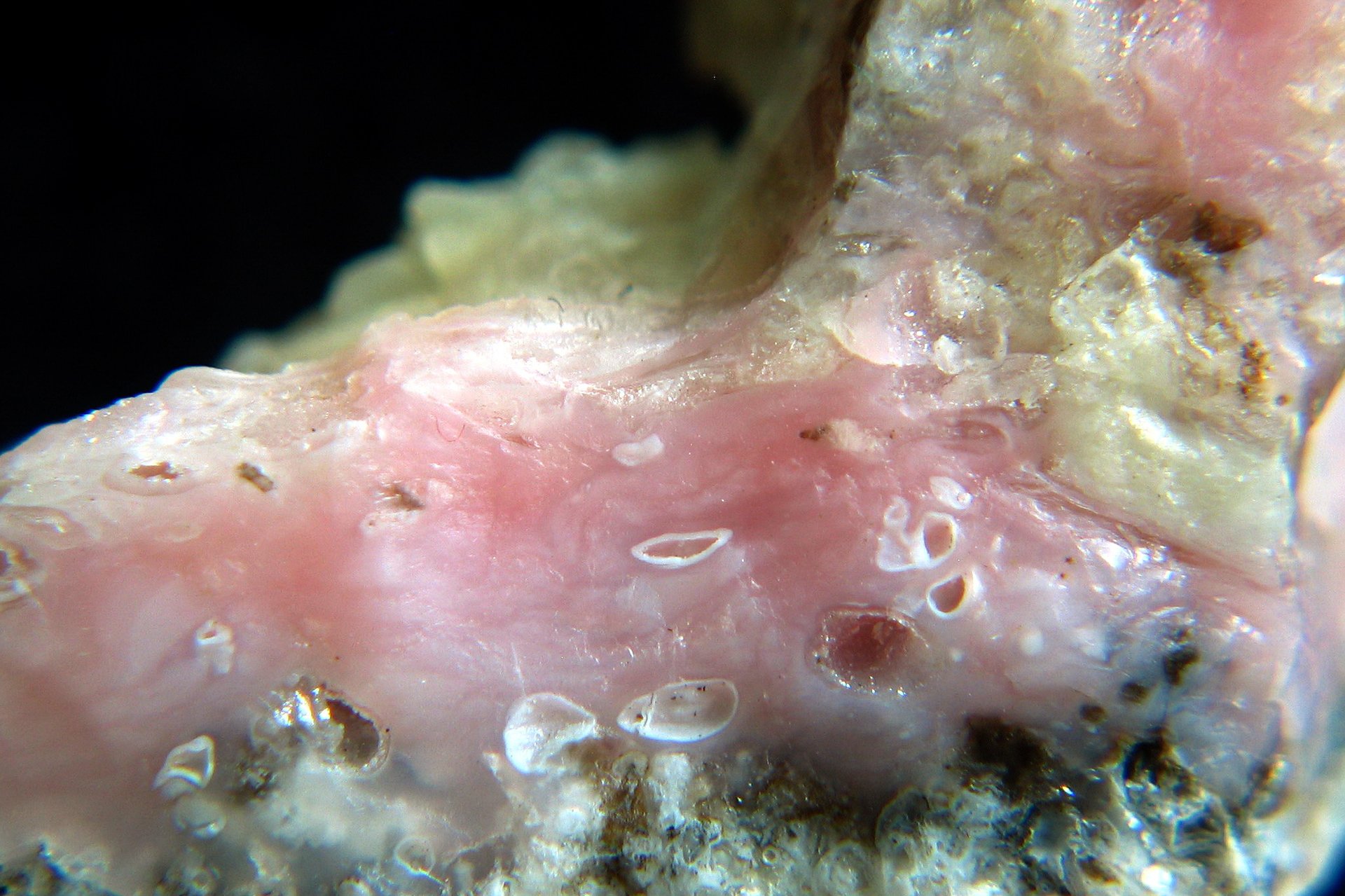
Pink Opal
The stone of emotional sunrise - soft pink opal for tender heart healing, compassion, and gentle renewal
- Pink opal is the national stone of Peru, where it has been used in indigenous healing traditions for centuries before European contact.
- The organic compound palygorskite (a clay mineral) creates the dendritic "flower" or "fern" patterns in Peruvian pink opal - making these pieces essentially a collaboration between two different minerals within the same stone.
- Opal contains between 3% and 21% water by weight - this makes it more sensitive to environmental changes than almost any other mineral. Rapid humidity changes can cause opal to crack or craze.
- The word "opal" derives from the Sanskrit "upala" (precious stone) via Latin and Greek, reflecting opal's ancient standing as one of the most valued gems across cultures.
- Pink opal from Mexico's Jalisco state is sometimes found in transparent to translucent form, resembling pink glass - these Mexican pink opals are valued differently from Peruvian material and show what the mineral looks like when clear rather than massive.
- those working through emotional pain or heartbreak
- practitioners of self-compassion and inner child work
- those drawn to soft, feminine pink energies
- crystal collectors interested in opal varieties
- anyone seeking gentle, accessible heart healing
- those needing a durable daily-wear stone
- buyers wanting play-of-color fire opals
- collectors seeking investment-grade gem specimens
What Is Pink Opal?
Pink Opal is a variety of common opal (without the rainbow play-of-color of precious opal) with a soft rose to pale pink color caused by the presence of the organic compound palygorskite or by trace amounts of manganese and iron within its amorphous hydrated silica structure.
The most prized variety comes from Peru's Andes mountains, where it occurs in sedimentary deposits as a national gemstone.
Unlike the fire opals and black opals that dazzle with spectral color play, pink opal has a gentle, matte to silky opaque appearance - more reminiscent of porcelain than gemstone.
This quality actually makes it more accessible and less fragile-feeling to new crystal users, and its soft color has made it one of the most beloved heart stones in the crystal healing community.
Peruvian pink opal (sometimes called Andean opal) is distinguished by occasional dendritic or flower-like inclusions of palygorskite that create natural fern or leaf patterns within the stone. These patterned pieces are particularly prized and carry the stone's full emotional healing reputation with added visual beauty.
Pink Opal vs. Similar Pink Stones
| Property | Pink Opal | Rose Quartz | Pink Chalcedony |
|---|---|---|---|
| Hardness | 5.5-6.5 | 7 | 6.5-7 |
| Price/lb | $ Budget | $ Budget | $ Budget |
| Rarity | Common | Very common | Uncommon |
| Best For | Deep emotional healing | Self-love, romance | Nurturing care |
Meaning and Symbolism
Pink opal has earned its reputation as one of the most powerful emotional healing stones in crystal traditions. Practitioners describe it as a stone that "speaks directly to the heart" - said to bypass intellectual defenses and reach the soft, vulnerable core where unexpressed grief, longing, and old emotional pain are held.
The Andean tradition from Peru's indigenous communities associates pink opal with the stone of renewal and the dawn - reflecting its color, which resembles the soft pink of sunrise after a night of emotional darkness.
It is said to bring hope and the certainty of renewal to those whose hearts have been worn down by loss, rejection, or chronic unexpressed feeling.
In crystal healing practice, pink opal is particularly valued for those who struggle with emotional numbness, excessive intellectualization of feelings, or the self-protective habit of not allowing themselves to feel deeply. The stone is said to gently soften these defenses and invite a more authentic engagement with emotional life.
Historical Timeline
Healing Tradition
Emotional
Practitioners regard Pink Opal as among the most powerful stones for deep emotional healing - particularly for grief that has been suppressed, unexpressed, or intellectualized away.
The stone is said to gently open the door to tears and the release that follows them, not forcing emotional catharsis but making it safe and possible. Many crystal healers use it for clients dealing with longstanding heartbreak, chronic emotional pain, and the quietly devastating sense of not being worthy of love.
It is traditionally associated with childhood emotional wounds and the specific kind of healing that requires simply being witnessed and held.
Spiritual
In spiritual practice, pink opal is associated with the heart chakra's deepest layers - the places that have been protected by emotional walls built after wounding.
Practitioners believe the stone gently dissolves these walls from the inside out, allowing genuine spiritual love - the impersonal, universal kind - to reach parts of the heart that personal love has not been able to access.
Some traditions connect pink opal with the archetype of the divine beloved, using it in devotional practices aimed at experiencing oneself as fundamentally loveable and worthy.
Physical
Some crystal wellness practitioners associate Pink Opal with the heart and lungs, sleep quality, and hormonal balance in women. It is traditionally used in placement over the heart during energy healing sessions. No scientific evidence supports these associations.
Opal's water content is a physical fact; its metaphysical implications are traditional belief, not science. Always consult a qualified healthcare provider for health concerns.
Zodiac, Birthstone and Gifts
Cancer's deeply emotional, nurturing nature aligns profoundly with pink opal's emotional healing energy - the stone supports Cancer's natural empathy while helping protect against emotional overwhelm. Libra's heart-centered desire for harmony and balanced relationships resonates with pink opal's gentle heart-opening and renewal qualities.
Care and Cleansing
Moonlight is the strongly preferred cleansing method for pink opal - place on a windowsill under a full moon overnight. Avoid leaving outside where dew could collect on the stone. The lunar energy aligns with opal's water-based nature and emotional associations.
Gentle sound cleansing with a crystal bowl or soft music is safe and effective for pink opal. This is particularly recommended for regular cleansing of a daily-use emotional healing stone, as it avoids any moisture or thermal change that could stress the stone.
Absolutely avoid salt - salt is harshly desiccating for opal and can cause crazing (surface cracking) by drawing moisture from the stone's structure. Avoid also prolonged sunlight, which can cause similar dehydration cracking in opal.
- DO store in a cool, slightly humid environment - opal needs moisture to maintain structural integrity.
- DO NOT use salt for cleansing as it draws water from opal's structure and can cause cracking.
- DO NOT expose to prolonged sunlight or heat which causes opal to lose water and crack.
- DO NOT use ultrasonic cleaners, steam cleaners, or harsh chemicals on opal.
- NOTE that pink opal at 5.5-6.5 hardness scratches more easily than quartz varieties - store separately.
Real vs Fake
Peruvian pink opal has a characteristic slightly chalky, soft rose color with natural internal variation including veins, matrix inclusions, or the distinctive palygorskite flower patterns. The color appears absorbed into the stone rather than coating it.
Dyed howlite is the most common substitute sold as pink opal at markets. Howlite has a slightly different texture (often shows natural gray veining through the pink), is somewhat harder (3.5 vs 5.5-6.5 for opal), and lacks opal's slightly waxy luster.
Pink glass fakes are too perfectly smooth and transparent. Real pink opal has a slightly chalky, opaque quality with natural color variation and often shows faint internal texture or veiling.
Synthetic opal (Gilson opal) exists in various colors including pink but tends toward excessive uniformity and a slightly plastic appearance. Natural pink opal shows more irregular, organic color distribution.
Purchase from dealers who specify Peruvian origin (Ica department or Arequipa region) or Australian source. Reputable mineral dealers with established opal sourcing relationships are the most reliable for authentic, natural pink opal.
Pink Opal Jewelry & Gifts
Pink opal tumbles run $5-$25; carved pieces $15-$60; Peruvian pieces with palygorskite flower inclusions $30-$150. Quality material is accessible at multiple price points.
Peruvian pink opal with visible fern or flower inclusions of palygorskite represents the premium tier - these patterns are natural, beautiful, and genuinely distinctive. Look for clear, well-defined patterns rather than vague smudging.
Color consistency and depth are primary quality factors for non-patterned pieces. Look for even, warm rose pink without excessive gray or brown undertones. Deep, even pink throughout the carved or polished piece indicates quality rough was used.
For carved pieces (hearts, spheres, towers), smooth polish without surface pitting and even color distribution are key quality markers. Some natural matrix inclusions are acceptable; excessive surface crazing is not.
Be alert to very cheap pink opal at tourist markets that may be dyed howlite. Dyed material's color runs in lines following natural howlite veining, while opal's color is more evenly distributed. When in doubt, ask about the species and test hardness if possible.
Where to Buy Pink Opal
Affiliate disclosure: Some links below earn us a small commission at no extra cost to you. See our affiliate disclosure page.
Handmade, raw, and tumbled pieces from independent sellers worldwide.
Shop Pink Opal on Etsy →Accessories, tools, and specimen sets with fast Prime delivery.
Shop Pink Opal on Amazon →Certified loose gemstones graded and photographed for online buyers.
Shop Pink Opal on GemSelect →Pairs Well With



Where Pink Opal Is Found


