Purple Halite
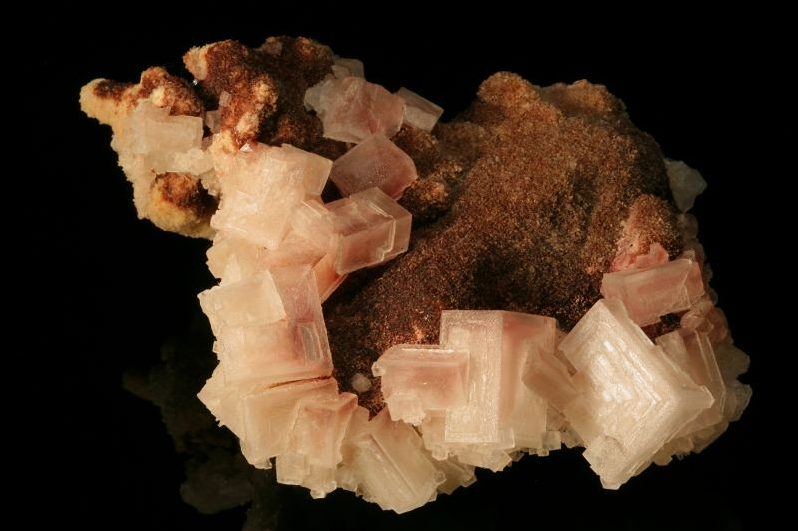
Ancient violet salt crystals in perfect cubic form, rare in natural purple coloring and prized for crown chakra and spiritual clarity work.
- Purple halite gets its color from radiation-induced defects called F-centers in the crystal lattice - the same mechanism that colors some purple fluorite.
- The violet color in purple halite will fade if left in direct sunlight for extended periods, as UV radiation bleaches the color centers responsible for the purple hue.
- Despite being Mohs 2.5, purple halite cleaves in perfectly geometric cubes - you can produce smaller perfect cubes by carefully splitting larger specimens along natural cleavage planes.
- Purple halite is much rarer than pink halite because radiation-induced coloring requires specific geological conditions over very long time spans.
- All halite - clear, pink, or purple - tastes salty because it is chemically identical to table salt (NaCl); the color is purely from structural defects or trace inclusions.
- Mineral collectors specifically seeking rare colored halite varieties with the distinctive cubic crystal habit
- Crown and third eye chakra practitioners who want a visually striking purple stone with evaporite mineral origin
- Display collectors who appreciate mineralogical rarity combined with natural purple color
- Those building a complete halite color collection alongside pink and clear varieties
- Spiritual practitioners drawn to salt's ancient purification symbolism in a crown chakra color
- Anyone wanting a durable everyday stone - purple halite is Mohs 2.5 and dissolves in water; choose amethyst for durable purple
- Humid environments or near water sources - the crystal will degrade in high humidity without sealed storage
- Those expecting dramatic purple saturation - natural violet halite ranges from pale lavender to medium purple, not vivid gem purple
What Is Purple Halite?
Purple halite is a naturally violet-colored variety of halite (NaCl, sodium chloride) that acquires its color through exposure to natural radiation, which displaces sodium ions and creates color centers called F-centers (Farbzentren, German for color centers) within the crystal lattice. It rates 2 - 2.5 on the Mohs hardness scale.
This is the same mechanism responsible for purple coloring in certain fluorite and other halide minerals. The color ranges from pale lavender through violet to medium purple depending on radiation intensity and duration.
Halite crystallizes in the isometric (cubic) system with perfect cubic cleavage, and purple halite displays this geometry with the same crisp geometric faces as clear or pink varieties. Mohs hardness is 2 to 2.5, making it among the softest collectible minerals.
The specific gravity is 2.16, and the refractive index of 1.544 gives quality crystals a subtle internal brilliance when light passes through translucent zones.
Purple halite is considerably rarer than pink halite or clear halite, as the radiation-induced color requires specific geological conditions over long time spans. The primary US sources are the same evaporite deposits that produce pink halite - Searles Lake near Trona, California, and the Permian Basin of Kansas.
The violet color can fade with prolonged direct sunlight exposure, which bleaches the radiation-induced F-centers. Store in indirect or artificial light for long-term color preservation.
How Purple Halite Compares
| Property | Purple Halite | Amethyst | Fluorite (Purple) |
|---|---|---|---|
| Hardness | 2 - 2.5 | 7 | 4 |
| Price / piece | $ Budget | $ Budget | $ Budget |
| Water Safe | No - dissolves | Yes | Brief only |
| Color Origin | Radiation F-centers | Iron (Fe3+) | Radiation or impurities |
Meaning and Symbolism
Purple has carried spiritual and royal associations across virtually every major world culture - from the Phoenician murex dye that made purple a color of emperors, to the violet robes of Catholic bishops, to the crown chakra's violet association in modern energy traditions.
Purple halite inherits all of this symbolism while adding salt's ancient connection to purification, ritual, and sacred boundary-marking.
In crystal healing tradition, the combination of violet crown chakra energy and salt's purifying tradition makes purple halite a distinctive tool for spiritual clarity practices. Practitioners describe it as clearing not just emotional debris but mental and spiritual static - the accumulated residue of excessive external information, spiritual bypassing, or cognitive overload.
It is said to support clear thinking and genuine intuition uncluttered by noise.
The radiation-induced nature of purple halite's color is itself meaningful to some practitioners - the color emerged from deep geological energy over vast time, not from surface chemistry. This is interpreted as representing wisdom born from depth and duration rather than surface appearance.
Many use it to mark significant spiritual transitions or to anchor crown chakra practices at new year, solstice, or other temporal thresholds.
Historical Timeline
Healing Tradition
Emotional
Practitioners believe purple halite supports emotional and mental clarity at a subtle level - described not as a dramatic clearing stone but as one that gradually settles mental static and overthinking.
It is said to be particularly helpful for those who feel spiritually overwhelmed or mentally congested from excessive meditation, spiritual seeking, or information overload.
Many crystal workers use it during periods of intentional rest from active practice, placing it in their space as a gentle companion that maintains clear, quiet energy without demanding engagement. The stone is traditionally associated with discernment - the ability to distinguish genuine intuition from mental noise.
Practitioners describe it as supporting honest self-assessment without harsh self-judgment.
Spiritual
In crystal healing tradition, purple halite is used primarily at the crown chakra and third eye chakra for practices focused on spiritual clarity and the release of mental constructs that obstruct genuine insight.
Salt's ancient purification tradition combined with purple's crown chakra energy creates a stone that practitioners describe as purifying at the level of thought and spiritual identity rather than emotion alone. Many use it during meditation retreats, spiritual fasting, or periods of dedicated contemplative practice where clarity of perception is the primary intention.
It is associated with Neptune and Uranus energy - transcendence of ordinary limitations and breakthrough into expanded awareness.
Physical
Crystal wellness practitioners place purple halite in meditation spaces and study areas for its traditionally clarifying energy. It is said to support focus and clear thinking when used as a visual anchor during work that requires sustained concentration.
Some practitioners use it near the crown of the head during relaxation and breathwork sessions focused on mental release and spaciousness. Purple halite must never be used in water elixirs due to its dissolving nature.
Its primary physical wellness association is supporting the conditions for mental calm - a clear, quiet space in which the body's natural regulatory processes can operate without interference from mental agitation.
Zodiac, Birthstone and Gifts
Aquarius, associated with intellectual clarity, unconventional thinking, and transcendence of conventional limitation, resonates with purple halite's crown chakra and Uranus planetary associations. Practitioners suggest the stone supports Aquarius's visionary capacity while grounding it in genuine insight rather than idealistic abstraction.
Purple halite's rarity also appeals to Aquarius's affinity for the unusual and overlooked.
Pisces connects to purple halite through Neptune rulership and the sign's deep spiritual sensitivity and dissolving of boundaries. The stone's water element association and its literal water-solubility create an interesting correspondence with Pisces's fluid, permeable nature.
Practitioners recommend it for Pisces individuals working to maintain spiritual clarity without losing themselves in oceanic empathic absorption.
Care and Cleansing
Never use water, salt water, or any wet method to cleanse purple halite. The crystal is sodium chloride and dissolves in water without exception. Additionally, avoid prolonged direct sunlight exposure, which can bleach the radiation-induced violet color over time. This is one of the most fragile minerals in terms of cleansing restrictions.
Sound cleansing with a singing bowl, tuning fork, or bell is the safest recommended method. Visualization and intention-setting is equally effective for practitioners comfortable with that approach. Selenite charging plates provide convenient overnight energy clearing without any physical risk to the specimen.
Smudge smoke from a distance (not allowing any moisture from the burning material to contact the crystal) is also acceptable.
- CRITICAL: Do NOT let purple halite contact water, even briefly - it dissolves, and crystal faces are permanently and irreversibly damaged.
- DO store in a sealed, low-humidity display case with silica gel desiccant packets to protect from atmospheric moisture.
- DO NOT expose to prolonged direct sunlight - UV radiation bleaches the F-center color mechanism responsible for the purple hue.
- DO handle gently with dry hands and minimize handling frequency to prevent moisture and oil damage to crystal surfaces.
- DO NOT make water elixirs - dissolving halite creates a salt solution, not a safe gem water.
- DO keep away from children and pets who may be attracted to the salty taste of the mineral.
- NOTE: if color begins to fade, moving to an indoor low-light location away from windows can slow but not reverse bleaching.
Real vs Fake
Genuine purple halite shows the characteristic perfect cubic crystal habit of halite with 90-degree cleavage planes visible on crystal faces and edges. The violet color should appear within the crystal structure itself - in the body of the cubic crystals - rather than as a surface coating or dye.
Natural color from F-centers is typically uneven, concentrated in certain growth zones and lighter in others, reflecting variation in radiation exposure during geological formation.
The most direct authenticity test is a small damp fingertip contact on an inconspicuous face - genuine halite will show immediate surface dissolution (a dull spot) because it is literally salt. Resin or glass fakes will not react this way. The taste test is also diagnostic: genuine halite tastes distinctly salty.
Any specimen that claims to be purple halite but does not react to moisture and does not taste salty is not natural halite.
Dyed clear salt crystals are occasionally sold as natural purple halite. Dyed specimens often show more uniform, vivid color throughout all crystal zones without the natural variation of radiation-induced coloring. The dye may also bleed slightly onto hands or surfaces when handled with slightly moist fingers.
Natural purple halite is noticeably rarer and more expensive than pink halite, so very cheap purple specimens should be verified before purchase.
Purple Halite Jewelry & Gifts
Purple halite is a premium specialty mineral considerably rarer than pink halite, and prices reflect this scarcity. Individual small crystals or modest clusters typically sell for $25 to $60. Well-formed specimens with vivid color and multiple cubic faces run $60 to $150.
Exceptional museum-quality pieces with deep violet color and complex crystal habit can reach $200 or more from specialist mineral dealers.
Color depth and evenness are the primary quality factors. Deep, saturated violet specimens are the most desirable; pale lavender material, while genuine, commands lower prices. Crystal clarity - the degree to which light passes through the cubic crystal structure - also affects value, with more translucent specimens showing better internal light interaction.
Look for specimens where the color clearly originates from within the crystal rather than on the surface.
Purchase exclusively from reputable mineral dealers who can verify specimen origin and have appropriate storage practices for moisture-sensitive minerals. Ask about how the specimen has been stored. A seller who ships purple halite in a plastic bag without humidity protection is not handling the material properly.
Searles Lake material from Trona, California, is the most documented US source.
Where to Buy Purple Halite
Affiliate disclosure: Some links below earn us a small commission at no extra cost to you. See our affiliate disclosure page.
Handmade, raw, and tumbled pieces from independent sellers worldwide.
Shop Purple Halite on Etsy →Accessories, tools, and specimen sets with fast Prime delivery.
Shop Purple Halite on Amazon →Certified loose gemstones graded and photographed for online buyers.
Shop Purple Halite on GemSelect →Pairs Well With

Where Purple Halite Is Found
