Red Zircon
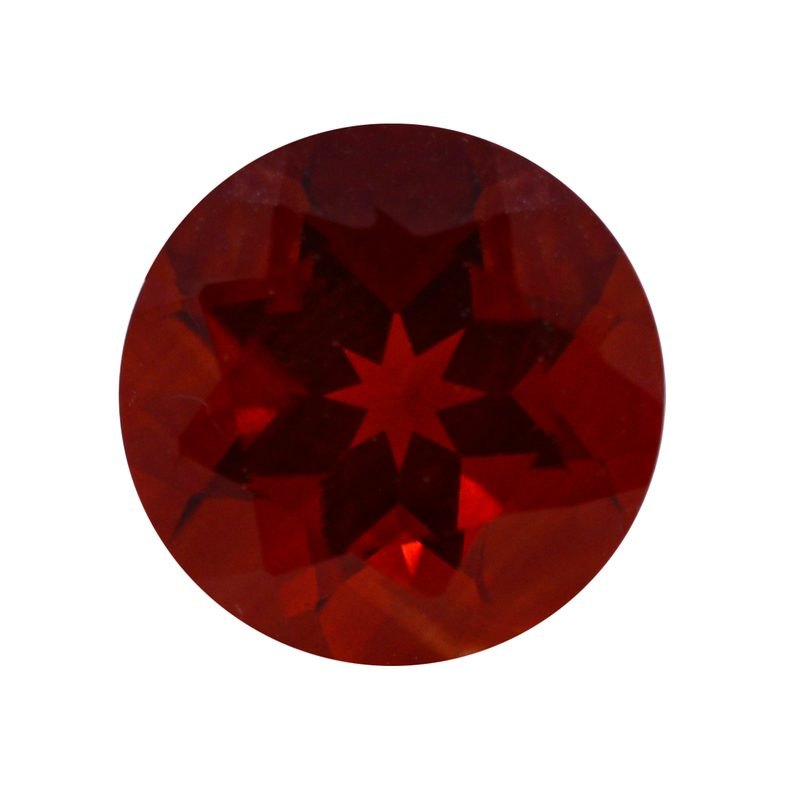
Rare cherry-to-crimson zircon from Cambodia and Tanzania - one of the most undervalued red gems, offering natural fire and pleochroism at a fraction of ruby's cost
- The medieval gem name 'hyacinth' or 'jacinth' referred to orange-to-red zircon and appears in biblical texts (Revelation 21:20) as one of the foundation stones of the New Jerusalem.
- Red zircon's birefringence is so strong that a faceted stone viewed through a loupe shows distinct doubling of back facets - a key distinguishing feature from ruby and spinel.
- Zircon is the oldest mineral on Earth: some zircon grains from Western Australia are 4.4 billion years old, older than any known rock formation.
What Is Red Zircon?
Red zircon is a nesosilicate mineral belonging to the zircon family, with the chemical formula ZrSiO₄. It crystallizes in the tetragonal system and displays a vitreous to adamantine luster. The stone ranges from transparent to translucent, with refractive indices between 1.810 and 2.024, giving it exceptional brilliance and sparkle.
This gemstone rates 6.5 to 7.5 on the Mohs hardness scale, making it moderately durable for jewelry wear. Red zircon exhibits colors spanning orange-red, dark red, brownish-red, and ruby-red hues. The coloration typically stems from trace elements and lattice defects rather than a single chromophore, distinguishing it from many other red gemstones.
Red zircon forms as an accessory mineral in granites, pegmatites, and metamorphic rocks worldwide. Primary sources include Sri Lanka, Myanmar, Cambodia, Vietnam, Tanzania, and Australia. Its relative rarity compared to heat-treated blue zircon makes natural red specimens highly valued by collectors and gemstone enthusiasts seeking authentic color variety.
Meaning and Symbolism
Red zircon, historically called 'hyacinth' or 'jacinth,' is one of the rarest natural zircon color varieties, with zircon's mineralogy covered at Britannica’s mineral encyclopedia. Its deep red to orange-red color comes from trace element inclusions and radiation-induced color centers within the zirconium silicate structure. Fine natural red zircon has come historically from Sri Lanka's alluvial gem gravels and Australian deposits.
The gemstone called 'hyacinth' in medieval European lapidaries - worn as protective amulets by crusaders and pilgrims - was likely red to orange-red zircon. Before modern gemology, all red stones shared symbolic associations with blood and divine protection, making historical red zircon difficult to distinguish from ruby, spinel, and garnet.
Natural red zircon without heat treatment is a collector's prize because most red-toned zircon in commerce is produced by heating brown or golden material. Unheated Sri Lankan red zircon, documented by gemological certificates confirming natural color origin, carries premium pricing among collectors who value mineralogical authenticity and originality in their acquisitions.
Historical Timeline
Healing Tradition
Emotional
Practitioners believe red zircon encourages vital, grounded emotional energy and the courage to pursue genuine desires without hesitation or self-sabotage. It is said to clear stagnant emotional patterns and restore the warm, directed motivation that purposeful living requires, making it a favored stone during periods of creative renewal or significant personal life transitions.
Spiritual
Traditionally associated with the root chakra and primal spiritual vitality in crystal healing practice, red zircon is said to ground spiritual aspirations in the physical world and align the practitioner's energy with the ancient, enduring strength of the Earth itself. Crystal healing tradition holds that it supports embodied spiritual practice rooted in presence and physical awareness.
Physical
Some practitioners believe red zircon supports the physical vitality of the lower body and the adrenal system, associations drawn from its root chakra color attribution and the general crystal lore surrounding deep red stones. These claims are not medically verified and should not replace professional care. Red zircon is used in wellness settings as a companion during physical revitalization practices.
Care and Cleansing
Cleanse red zircon with lukewarm water and a soft brush; dry completely. Avoid ultrasonic cleaners. Smudging with sage or placing near a piece of selenite are popular gentle cleansing alternatives.
- Inspect facet edges periodically; metamict material can chip at edges over time.
- Avoid harsh chemical exposure and ultrasonic cleaners.
- Use protective ring settings - bezel preferred for daily wear.
- Store separately from harder gems to prevent surface damage.
Where to Buy Red Zircon
Affiliate disclosure: Some links below earn us a small commission at no extra cost to you. See our affiliate disclosure page.
Handmade, raw, and tumbled pieces from independent sellers worldwide.
Shop Red Zircon on Etsy →Accessories, tools, and specimen sets with fast Prime delivery.
Shop Red Zircon on Amazon →Certified loose gemstones graded and photographed for online buyers.
Shop Red Zircon on GemSelect →Pairs Well With