Bixbite
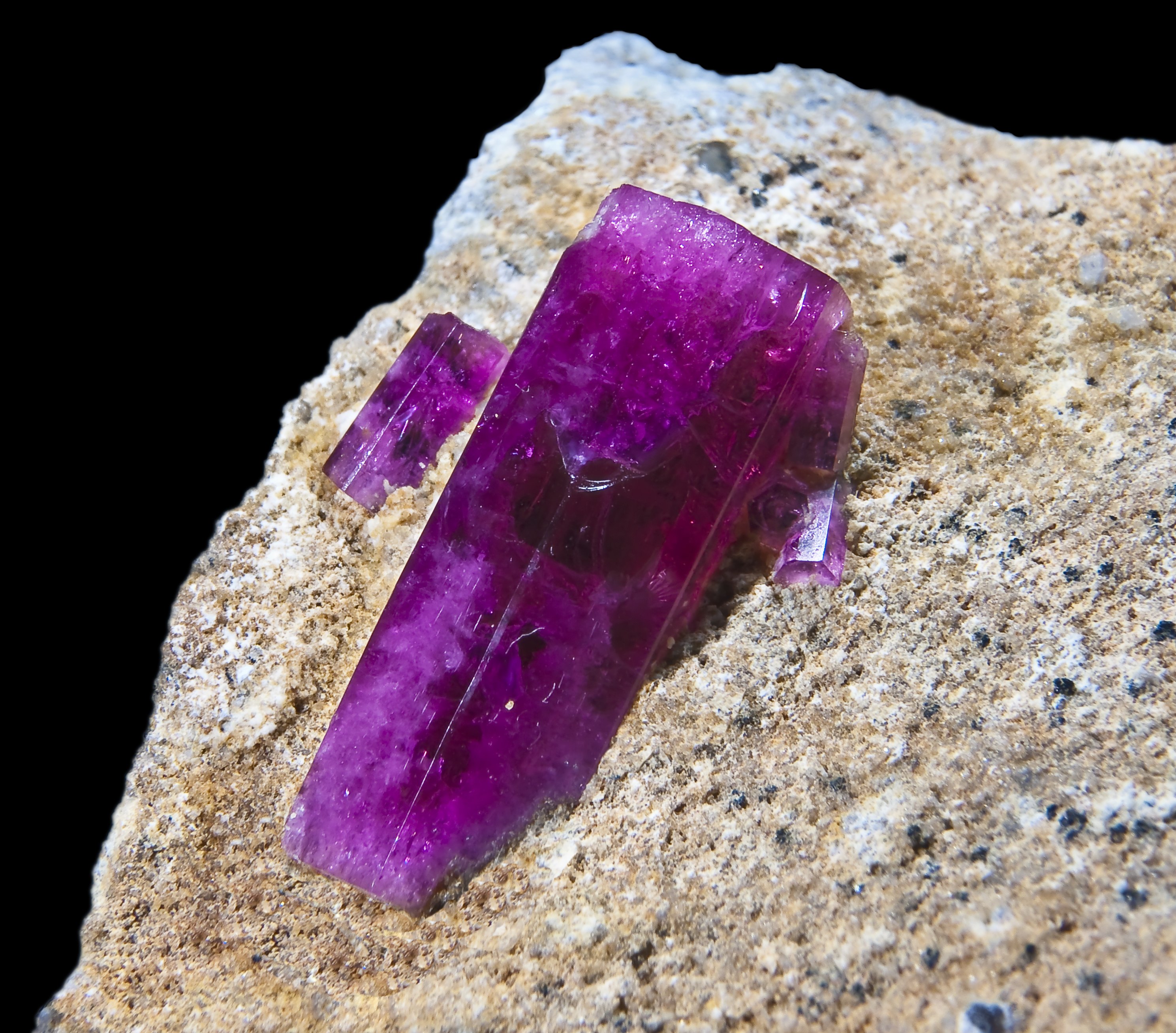
Born in Utah rhyolite cavities, bixbite is the extraordinarily rare red variety of beryl, rarer than diamond or emerald.
- Bixbite is estimated to be 1,000 times rarer than diamond by natural occurrence.
- Utah designated red beryl as its official state gem in 2001.
- Most faceted bixbite stones are under one carat, with stones above two carats extraordinarily rare.
- The Wah Wah Mountains deposit has produced fewer than 60,000 gem-quality crystals in total history.
- Red beryl is colored by manganese, the same trace element that colors morganite pink.
- Ultra-rare gem collectors seeking one of the rarest transparent gemstones on Earth
- Beryl family collectors wanting the full color suite alongside emerald and aquamarine
- American gem heritage collectors seeking Utah-origin specimens
- Wealthy buyers for a genuinely irreplaceable investment-grade gem
- Practitioners drawn to high-vibration red root-chakra stone work
- Anyone on a budget (try rubellite or garnet)
- Shoppers wanting large stones (bixbite typically stays under one carat)
- Readers seeking ancient folklore (red beryl was identified only in 1904)
What Is Bixbite?
Bixbite, also called red beryl, is the raspberry-red variety of beryl colored by trace manganese. It was identified in 1904 by Maynard Bixby in Utah's Thomas Range and was later named after him. It rates 7.5 - 8 on the Mohs hardness scale.
The only commercially significant source is the Wah Wah Mountains of southwestern Utah, where rhyolite volcanic rock yields red beryl crystals. At Mohs 7.5 to 8, bixbite is as hard as emerald and aquamarine.
Bixbite is one of the rarest transparent gems on Earth. The Wah Wah Mountains deposit has produced an estimated total volume equivalent to a handful of shoeboxes over decades of operation, with most crystals under one carat.
Commercial mining has been intermittent, and the deposit's remote location and limited yield keep supply essentially exhausted relative to demand. New Mexico has also produced small quantities.
The term bixbite has complicated history. The name was long used for red beryl but was officially retired by the International Mineralogical Association because of potential confusion with the mineral bixbyite (a manganese-iron oxide). The trade still widely uses bixbite, though mineralogical literature prefers red beryl.
Both terms refer to the same material, and major retailers typically use red beryl as the formal identification. Heat treatment is rare and not effective for color enhancement in this species.
How Bixbite Compares
| Property | Bixbite | Emerald | Ruby |
|---|---|---|---|
| Hardness | 7.5 - 8 | 7.5 - 8 | 9 |
| Price / carat | $$$$ Luxury | $$$ Premium | $$$ Premium |
| Rarity | Extremely Rare | Moderate | Moderate |
| Best For | Ultra-rare collection | Engagement, heirloom | Engagement, heirloom |
Meaning and Symbolism
Bixbite was only identified in 1904, so like tanzanite and tsavorite it lacks ancient folklore. Its modern significance comes from its extreme rarity and American origin, making it one of the most prestigious collector gems in the United States gem heritage.
Red beryl has been called the gem that is rarer than diamond, with estimates suggesting only a few thousand faceted stones exist worldwide.
In modern crystal healing tradition, bixbite is associated with vital passion, courage, and grounded life force. Its rare red color places it alongside ruby and red spinel in root chakra work, though its beryl family association also gives it heart chakra connections through the emerald relationship.
Practitioners often describe bixbite as a stone of unique personal power.
The gemological and collector community has built a distinctive identity for red beryl around its extreme rarity and single-source Utah provenance. Collector circles sometimes treat bixbite as the American equivalent of Russian alexandrite or Colombian emerald, a stone whose origin matters as much as its color or clarity.
Investment-grade pieces routinely reach auction houses and command significant prices.
Historical Timeline
Healing Tradition
Emotional
Practitioners believe bixbite is a stone of vital passion, traditionally associated with courage, grounded life force, and the confidence that comes from recognizing one's own unique identity. In crystal healing tradition, it is said to support readers seeking to express a genuinely distinctive voice, career path, or creative vision.
Many collectors treat their bixbite piece as a symbolic anchor for major life milestones. Practitioners often pair bixbite with garnet for complementary root-chakra work and with emerald for beryl-family heart pairing.
Because bixbite is so rare, practitioners rarely use it as a daily-practice stone. Instead it serves as a focal piece for specific intention work around authenticity, originality, and courageous self-expression. The stone's Utah origin also gives it a modern American symbolism of frontier individuality.
Spiritual
In crystal healing tradition, bixbite is linked with the root and heart chakras, bridging grounded vitality with authentic emotional expression. The stone's raspberry-red color is read as a blend of survival energy and heart openness in modern practice.
Many readers use bixbite as a focal anchor during significant intention work, particularly around claiming a unique voice or path.
Practitioners often describe bixbite as a singularity stone, fitting for readers engaged in work that requires them to be genuinely distinctive rather than merely excellent. Crystal workers sometimes place bixbite at the center of grids focused on creative courage, paired with clear quartz for amplification.
Because of extreme scarcity, bixbite-focused practice is rare in mainstream crystal healing. The stone's significance tends to be personal and symbolic rather than widely prescribed in tradition.
Physical
Practitioners believe bixbite is traditionally associated with heart muscle vitality, circulation, and what they describe as overall life force. Folklore and modern crystal writers link the stone with courage to undertake physical challenges and with stamina during demanding pursuits, framed as supportive accompaniment rather than medical intervention.
Because bixbite is so rare, most practitioners cannot incorporate it into regular physical-support practice. Readers attracted to the stone's lore typically choose more affordable red alternatives for daily practice while reserving bixbite for symbolic representation.
The stone is not a substitute for healthcare and practitioners are consistent in describing its role as accompanying rather than treating.
Zodiac, Birthstone and Gifts
Bixbite is not a traditional birthstone, but modern astrologers often associate it with fire signs Aries and Scorpio for the stone's passionate red color and rare courageous energy.
For Aries readers drawn to boldness, bixbite's rarity and red color align with the sign's pioneering temperament. Scorpio readers appreciate the stone's depth and intensity. Because bixbite is extraordinarily rare, most practitioners pair it symbolically with more affordable garnet or red spinel in zodiac kits.
Care and Cleansing
Bixbite is easy to maintain for such a valuable gem. Warm soapy water and a soft brush handle body oils and dust without risk. Avoid ultrasonic and steam cleaners on any fracture-filled or included specimens. Saltwater should be avoided on set pieces because of metal mounting concerns.
Moonlight, sound cleansing with a singing bowl, and brief smoke cleansing with palo santo or sage are all traditional and safe. Many practitioners rest bixbite on selenite plates as a gentle cleansing method that avoids handling the valuable stone unnecessarily.
Dry salt cleansing should be limited to short sessions, and saltwater soaks avoided.
Sunlight is fully tolerated and does not fade bixbite. Brief sun bathing is safe and sometimes described as a recharging practice. Long-term storage in a secure display cabinet is preferred over exposed placement. Annual jeweler inspection of settings is recommended, along with insurance valuation for any bixbite jewelry.
- DO insure bixbite jewelry given its extreme rarity and value.
- DO clean bixbite in warm soapy water with a soft brush.
- DO NOT use ultrasonic or steam cleaners on fracture-filled or included stones.
- DO set bixbite in protective bezel mountings for maximum protection.
- DO have prong settings inspected annually by a qualified jeweler.
- DO store bixbite in a secure case separately from other stones.
- Note: bixbite and red beryl refer to the same mineral; red beryl is the formal name.
Real vs Fake
Genuine bixbite shows characteristic raspberry-red color from manganese, with refractive index 1.568 to 1.580 and specific gravity 2.66 to 2.70 confirming beryl identification. Under a 10x loupe, natural bixbite typically shows distinctive liquid inclusions and growth tubes characteristic of beryl species.
Common confusions include rubellite tourmaline, red spinel, ruby, and red synthetic glass. Rubellite has different pleochroism and higher density. Ruby is significantly harder (Mohs 9). Red spinel has distinctive refractive behavior. Glass imitations show gas bubbles under magnification and lack the beryl growth pattern.
Laboratory-grown red beryl does exist in small quantities but is distinguishable from natural material through inclusion analysis. For any bixbite purchase, a lab certificate from a recognized gemological laboratory is essential, confirming natural origin, Utah provenance (or New Mexico, if from the secondary source), and absence of treatments.
Reputable sellers provide full documentation for all bixbite sales.
Bixbite Jewelry & Gifts
Bixbite is one of the most expensive gem materials on the market. Small stones under half a carat typically cost $2,000 to $5,000 per carat. Half-to-one carat stones reach $5,000 to $10,000 per carat.
Stones above one carat command $10,000 to $20,000 per carat or more for top specimens with vivid color and good clarity. Museum-grade pieces above two carats routinely reach five- and six-figure auction prices.
Treatment is essentially absent in bixbite because the natural color requires no enhancement and heat does not significantly improve the raspberry-red saturation. For purchases, focus on color saturation first, eye-clean clarity second, and well-cut proportions for optimal light return.
Always require a lab certificate specifying natural origin, Utah or New Mexico source, and no treatment. Ethical and provenance documentation is standard for all significant bixbite transactions.
Where to Buy Bixbite
Affiliate disclosure: Some links below earn us a small commission at no extra cost to you. See our affiliate disclosure page.
Handmade, raw, and tumbled pieces from independent sellers worldwide.
Shop Bixbite on Etsy →Accessories, tools, and specimen sets with fast Prime delivery.
Shop Bixbite on Amazon →Certified loose gemstones graded and photographed for online buyers.
Shop Bixbite on GemSelect →Pairs Well With


Where Bixbite Is Found
