Synthetic Spinel
Produced in every color of the spectrum with Mohs 8 durability, synthetic spinel is the industry's most versatile multi-hued lab gemstone.
- The famous Black Prince Ruby in the British Crown Jewels is not a ruby at all - it is a 170-carat natural red spinel.
- Synthetic spinel was one of the first commercially produced synthetic gemstones, manufactured since the early 1900s.
- Cobalt-blue synthetic spinel is sometimes used to imitate aquamarine or blue sapphire in costume jewelry.
- Synthetic spinel can be produced in colors that rarely or never exist in natural spinel specimens.
- The Verneuil flame-fusion process can produce a full synthetic spinel boule in just a few hours.
- Jewelry designers needing consistent color in any hue at low cost
- Buyers wanting a sapphire-blue or ruby-red stone with excellent durability under $50
- Collectors interested in gemological history - synthetic spinel has a fascinating production legacy
- Eco-conscious shoppers seeking zero-mining alternatives with real hardness
- Gift givers wanting a colorful, durable stone for birthstone jewelry without natural stone prices
- Investors or collectors - synthetic spinel has no natural provenance or resale premium
- Buyers specifically needing a Burmese or Sri Lankan origin story - consider natural spinel instead
- Anyone wanting a truly rare gem - natural red spinel from Myanmar is the precious alternative
What Is Synthetic Spinel?
Synthetic spinel is laboratory-created magnesium aluminum oxide (MgAl2O4), chemically identical to natural spinel. It is produced primarily by the Verneuil flame-fusion process, invented in 1902 by French chemist Auguste Verneuil. It rates 8 on the Mohs hardness scale.
Powdered aluminum oxide and magnesium compounds are dropped through an oxyhydrogen flame, melting and recrystallizing into a boule that is then cut into gemstones.
Natural spinel is an ancient and historically important gem - for centuries the great Black Prince Ruby in the British Crown Jewels was believed to be a ruby but is actually a 170-carat natural red spinel.
Synthetic spinel entered production in the early 20th century and quickly became widely used in costume jewelry, watchmaking, and industrial applications. The cubic crystal system gives synthetic spinel single refraction and a clean, glassy brilliance distinct from doubly-refracting natural gems.
What makes synthetic spinel uniquely versatile is its broad color range. By varying trace element additions during production, manufacturers produce cobalt blue, chrome green, red, pink, purple, yellow, orange, colorless, and black varieties.
Each color has its own trace element signature: cobalt produces vivid blues, chrome creates green tones, and iron combinations yield amber and yellow shades. This flexibility makes synthetic spinel the most color-diverse lab gemstone on the market.
Synthetic Spinel vs Natural Spinel vs Blue Sapphire
| Property | Synthetic Spinel | Natural Spinel | Blue Sapphire |
|---|---|---|---|
| Chemistry | MgAl2O4 (identical) | MgAl2O4 | Al2O3 |
| Hardness | 8 | 8 | 9 |
| Price / carat | $ Budget | $$ Mid-range | $$ Mid-range |
| Color range | Every color | Every color | Blue to pink/yellow |
| Best For | Affordable jewelry, design | Investment, collector | Heirloom fine jewelry |
Meaning and Symbolism
Natural spinel has been prized for over 2,000 years across Central Asia, India, and Europe, where it was frequently mistaken for ruby and sapphire due to its vivid colors. Practitioners believe synthetic spinel shares the core energetic properties of natural spinel since the mineral structure is identical.
In crystal healing tradition, spinel is associated with vitality, renewal, and the clearing of mental exhaustion.
Red spinel in particular carries ancient associations with courage, passion, and life force - the same qualities attributed to ruby in many traditions. Blue synthetic spinel, resembling sapphire, is linked in modern crystal practice with wisdom, clarity, and honest communication.
Many practitioners who work with synthetic gems argue that crystalline structure rather than geological age determines energetic character.
Synthetic spinel's remarkable history as an impersonator of more expensive stones gives it an unusual symbolic dimension: it represents authenticity hiding behind assumed identities. The Black Prince Ruby story is a cautionary tale about assuming appearance equals identity - a lesson that resonates in both gemological and personal contexts.
Many crystal enthusiasts appreciate synthetic spinel precisely because it challenges assumptions about value and worth.
Historical Timeline
Healing Tradition
Emotional
Practitioners believe synthetic spinel, like natural spinel, is associated with emotional renewal and the restoration of vitality after periods of exhaustion or stagnation. Many who work with crystals find red or orange spinel helpful for reigniting motivation and joy during emotionally flat periods.
Is said to help clear mental clutter and restore a sense of forward momentum. Blue synthetic spinel is traditionally linked to calming emotional turbulence and supporting honest, open communication in difficult conversations.
Spiritual
In crystal healing tradition, spinel is associated with the energy of alignment and higher purpose - helping the user reconnect with core motivations after distraction or doubt. Practitioners believe synthetic spinel carries the same alignment energy as natural spinel since the crystal structure is chemically identical.
Red synthetic spinel is said to activate the Root chakra's connection to grounded, purposeful action. Blue and purple varieties are linked to the Throat and Third Eye chakras, supporting spiritual clarity and authentic self-expression.
Physical
While no gemstone replaces medical care, practitioners traditionally associate spinel with support for physical energy and stamina. Many find carrying or wearing red synthetic spinel helpful as a motivational companion during periods of low physical energy or recovery.
Is said in crystal wellness tradition to support the blood and circulatory system symbolically - a property historically shared with ruby, which spinel so often resembled. Blue spinel is linked to cooling and calming physical tension, particularly in the throat and respiratory areas in traditional practice.
Zodiac, Birthstone and Gifts
Natural spinel is a birthstone alternative for August alongside peridot and sardonyx, but synthetic spinel's range of colors makes it a flexible choice across multiple zodiac associations. Scorpio (October 23 - November 21) is linked to red and black spinel varieties for their associations with intensity, passion, and transformation.
Sagittarius (November 22 - December 21) resonates with blue and purple spinel through shared associations with wisdom, truth-seeking, and expansive thinking.
Synthetic spinel's color versatility means it can be chosen by color association for any sign rather than strict birthstone tradition. Many astrology enthusiasts appreciate this flexibility, selecting cobalt blue for Aquarius, green for Virgo, or red for Aries based on elemental color correspondences rather than calendar birthstone rules.
Care and Cleansing
Synthetic spinel is one of the most durable and easy-to-cleanse lab gemstones available. Running water, sunlight, moonlight, and sound methods are all safe and effective. Brief rinsing under cool water removes surface energy with no risk to the stone. Its color is stable - cobalt, chrome, and iron colorants are not UV-sensitive.
Placing synthetic spinel on a selenite plate or in moonlight overnight is a popular low-effort cleansing method for regular practitioners. Salt cleansing is safe given the stone's high hardness and chemical stability.
Ultrasonic cleaning is generally safe for unfractured specimens in durable settings, but consult a jeweler before using it on antique or glue-set pieces.
- DO store synthetic spinel away from diamond, which can scratch even Mohs 8 surfaces.
- DO clean with mild soap and warm water; ultrasonic cleaning is safe for solid, unfractured specimens.
- DO NOT assume all synthetic spinel is equal quality - flame-fusion stones may show curved striae under magnification; hydrothermal stones are cleaner.
- DO remove from ring before heavy impact activities - hardness does not equal toughness against sharp blows.
- DO disclose synthetic origin when reselling in the US - FTC requires accurate gem origin labeling.
- DO inspect cobalt-blue synthetic spinel under different light sources - color may shift noticeably between fluorescent and incandescent light.
Real vs Fake
The key question for synthetic spinel is not fake versus real but lab versus natural - both are genuine spinel. To identify any spinel versus an imitation like glass or cubic zirconia, test hardness: spinel at Mohs 8 scratches glass easily and is not scratched by a steel file.
Glass scratches at 5 to 6; cubic zirconia at 8 to 8.5 but shows different optical properties.
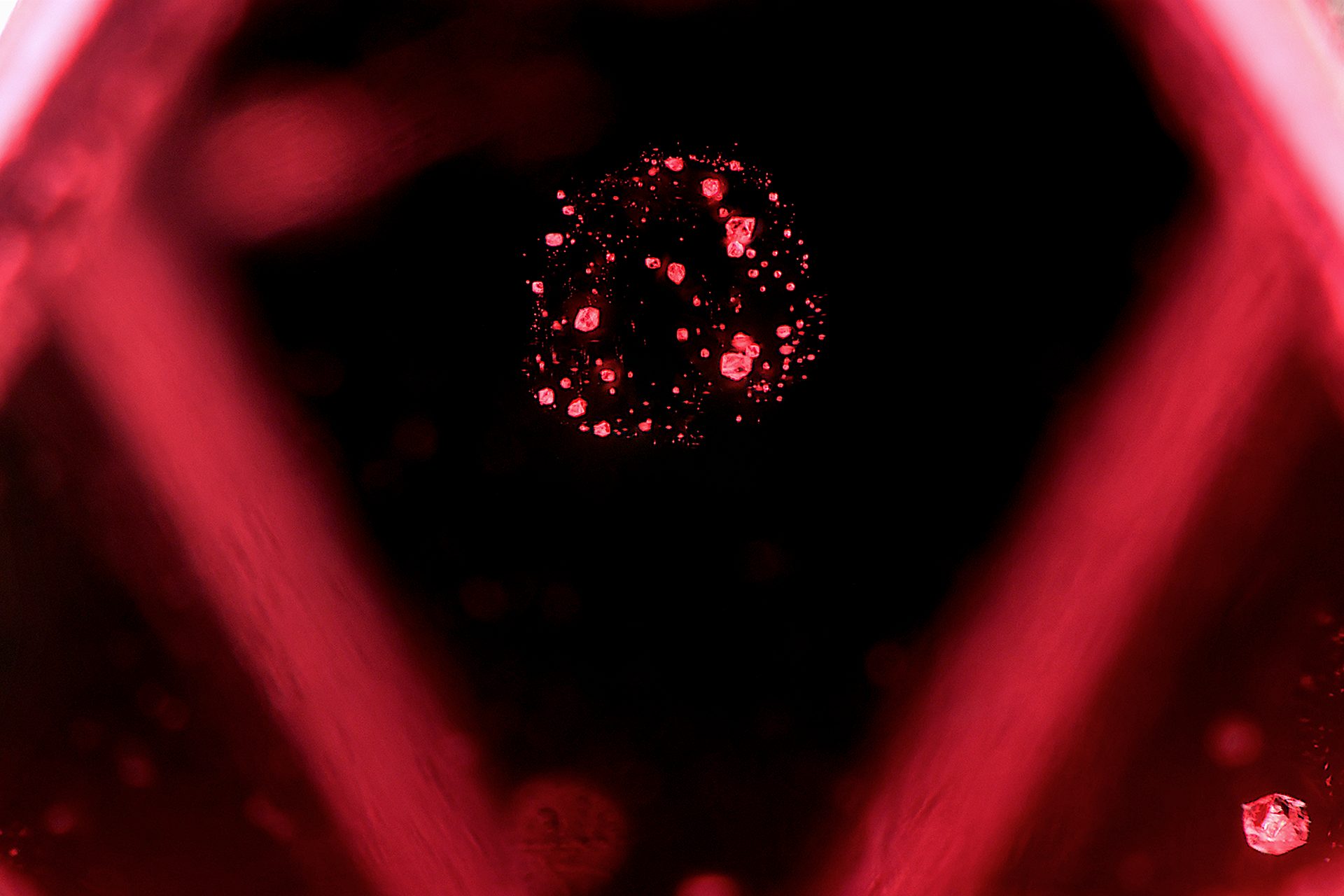
Flame-fusion synthetic spinel can be distinguished from natural spinel under magnification by curved growth striations - a characteristic arc pattern formed during rapid boule growth. Natural spinel shows angular crystal inclusions or fingerprint-pattern fluid inclusions. Very clean, inclusion-free stones at low prices are almost certainly synthetic.
Cobalt-blue synthetic spinel is the most commonly used simulant for sapphire in costume jewelry. Under a dichroscope it shows no pleochroism, while natural sapphire shows strong blue/violet pleochroism. A refractometer reading of 1.718 to 1.728 (single refraction) quickly distinguishes spinel from doubly-refracting sapphire.
Any gemological lab can confirm natural vs synthetic origin definitively.
Synthetic Spinel Jewelry & Gifts
Synthetic spinel typically sells for $5 to $50 per carat depending on color, cut quality, and production method. Flame-fusion stones are least expensive; hydrothermal synthetic spinel is cleaner and commands slightly higher prices. Cobalt blue is the most popular color and is widely available in calibrated cuts for standard jewelry settings.
For jewelry use, prioritize cut quality over carat weight - a well-cut 1-carat synthetic spinel outperforms a poorly cut 2-carat stone in brilliance. Confirm the seller discloses synthetic origin and the production method. Hydrothermal synthetic spinel is preferred for fine jewelry applications; flame-fusion is ideal for costume jewelry and design work.
Where to Buy Synthetic Spinel
Affiliate disclosure: Some links below earn us a small commission at no extra cost to you. See our affiliate disclosure page.
Handmade, raw, and tumbled pieces from independent sellers worldwide.
Shop Synthetic Spinel on Etsy →Accessories, tools, and specimen sets with fast Prime delivery.
Shop Synthetic Spinel on Amazon →Certified loose gemstones graded and photographed for online buyers.
Shop Synthetic Spinel on GemSelect →Pairs Well With


Where Synthetic Spinel Is Found

