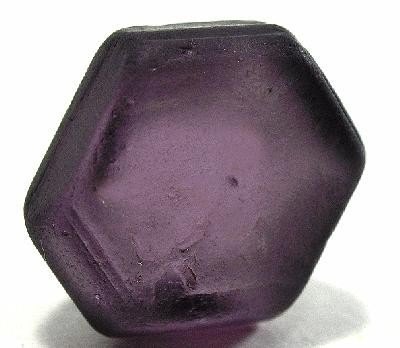
Taaffeite
Discovered as a polished cut stone in 1945, taaffeite is one of the world's rarest gems, a lavender-purple beryllium oxide.
- Taaffeite is one of the few minerals ever identified first from a polished cut stone rather than a raw crystal.
- Count Richard Taaffe discovered the gem in 1945 after noticing unusual double refraction in a stone he had purchased as spinel.
- The original taaffeite identified by Taaffe is now in major natural history museums in London.
- Annual global production of gem-quality taaffeite is measured in hundreds of carats, making it one of the rarest commercial gems.
- Taaffeite is similar to spinel in hardness and appearance but is doubly refractive while spinel is singly refractive.
- Collectors of the world's rarest gemstones
- Investment-grade gemstone buyers seeking extreme rarity
- Buyers drawn to soft lavender pastels in high-hardness gems
- Practitioners working with crown and third eye higher meditation
- Gift givers shopping for truly exceptional heirloom milestones
- Budget shoppers (taaffeite exceeds $2,000 per carat; consider spinel or kunzite)
- Those needing broad commercial availability (taaffeite supply is essentially non-existent)
- Buyers without access to laboratory certification (synthetic substitution risk)
What Is Taaffeite?
Taaffeite (more precisely magnesiotaaffeite-2N'2S in modern mineralogical nomenclature) is a beryllium magnesium aluminate, and one of the few gemstones that was first identified from an already-cut polished gem rather than from a raw crystal specimen. It rates 8 - 8.5 on the Mohs hardness scale.
In 1945, Irish gemologist Count Richard Taaffe noticed that a lavender stone he had purchased as spinel showed unusual double refraction, and laboratory analysis revealed it was a previously unknown mineral species.
At Mohs 8 to 8.5, taaffeite is among the hardest commercial gemstones, comparable to spinel and topaz. It is chemically and visually similar to spinel and is often confused with it.
The distinguishing feature is that taaffeite is doubly refractive (uniaxial) while spinel is singly refractive (isotropic), a distinction visible only through polarizing gemological instruments.
Gem-quality taaffeite occurs in a handful of localities: Sri Lanka (the original source and still the most common), Myanmar (Burma), Tanzania, and very minor production from Madagascar, Russia, and China.
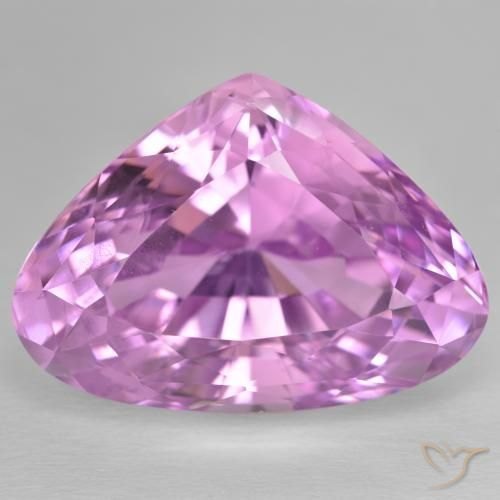
Total global annual production is extremely limited, often just a few hundred carats of cut material, which makes taaffeite one of the rarest commercial gemstones on earth. Colors include lavender (most common), mauve, pink, violet, red, and rare green. The pink-to-lavender range is the most commonly cut commercial form.
How Taaffeite Compares
| Property | Taaffeite | Spinel | Kunzite |
|---|---|---|---|
| Hardness | 8 - 8.5 | 7.5 - 8 | 6.5 - 7 |
| Price / carat | $$$$ Luxury | $$ Mid-range | $ Budget |
| Rarity | Ultra rare | Rare (fine) | Uncommon |
| Best For | Collector investment | Fine jewelry | Pendants, earrings |
Meaning and Symbolism
Taaffeite has one of the most unusual discovery stories in gemology. In 1945, Count Richard Taaffe, an Irish gemologist, purchased a box of mixed stones in Dublin that included a lavender stone sold as spinel.
When Taaffe examined the stone under a polariscope, he noticed it showed double refraction, a property that should be impossible in spinel. Laboratory analysis at Imperial College London confirmed it was a new mineral species, which was named taaffeite in his honor.
Taaffe's original stone is now in major natural history museums in London.
Because the mineral was identified from a polished gem rather than a raw specimen, taaffeite had already been cut and sold as spinel before it was formally named. This means the first known taaffeite was likely in circulation for years or decades before anyone recognized it as a distinct species.
The original source of the stone was never identified with certainty, though subsequent finds established Sri Lanka as the primary commercial origin.
In modern crystal healing tradition, taaffeite is associated with the crown and third eye chakras and with qualities of higher meditation, intuitive clarity, and connection to what practitioners describe as rare personal insights.
Because taaffeite is so rare and expensive, most folk tradition around the stone is modern Western crystal healing rather than ancient lore. It pairs naturally with amethyst (lavender family companion), with spinel (its visual twin), and with clear quartz for amplified meditation practice.
Historical Timeline
Healing Tradition
Emotional
Practitioners believe taaffeite supports refined emotional awareness and delicate intuitive work. In modern crystal healing tradition, it is sometimes described as a stone for people doing sophisticated inner work that requires subtlety and precision.
Because taaffeite is extremely expensive and typically not worn casually, many owners treat it primarily as a collector or ceremonial stone rather than a continuous emotional companion. Practitioners who do use taaffeite energetically sometimes pair it with amethyst for combined crown work or with rose quartz for tender higher-heart practice.
Because the stone's folk tradition is limited by its recent discovery, most modern associations are extrapolations from lavender color, crown-chakra placement, and mineral-family context rather than established ancient lore. Readers sometimes describe taaffeite as a talisman for rare accomplishment or significant milestone rather than a daily-practice tool.
Spiritual
Taaffeite is associated with the crown and third eye chakras in modern Western crystal healing tradition. Practitioners describe it as a stone of refined insight and subtle spiritual awareness.
In metaphysical framing, taaffeite is sometimes grouped with amethyst, kunzite, and rare lavender gemstones for higher-meditation work. Many collectors treat taaffeite as a display or investment gem rather than an active meditation tool given its price.
For practitioners who do work with taaffeite spiritually, it pairs readily with clear quartz for amplified intention and with selenite for cleansing.
The stone's rarity itself becomes part of its spiritual narrative, with some readers describing taaffeite as a reminder that the most meaningful insights often emerge from long patient attention to subtle signals.
Physical
Practitioners believe taaffeite supports what they describe as general mental clarity and refined sensory perception. Because of the stone's short history and limited availability, no meaningful folk tradition exists around its physical-health associations; modern interpretations are extrapolations from its lavender color and crown-chakra placement.
In practice, taaffeite is almost never worn for continuous physical-health crystal work because of its expense.
Many owners wear taaffeite only on exceptional occasions and do not associate it with specific physical applications. It is not a substitute for medical care, and practitioners frame its role as supportive alongside proper treatment.
Because taaffeite is hard (Mohs 8 to 8.5) and chemically stable, it is durable enough for daily wear in protective settings if desired, though the expense usually limits it to heirloom and special-occasion jewelry rather than everyday use.
Zodiac, Birthstone and Gifts
Taaffeite is tentatively associated with Pisces in modern Western astrology because of its Neptune planetary correspondence and the sign's connection with refined intuitive awareness. Because taaffeite is so rare and its tradition so recent, formal zodiac associations are still developing.
Practitioners who work with taaffeite sometimes associate it with other water signs (Cancer, Scorpio) for sensitive perception work. Taaffeite is not on the US birthstone list and is rarely given as a birthday gift because of its rarity and price.
When given, it is typically for extraordinary milestones such as major anniversaries, significant retirement, or exceptional professional achievements.
Care and Cleansing
Taaffeite is one of the more durable gems for maintenance because of its Mohs 8 to 8.5 hardness and chemical stability. Warm soapy water and a soft brush are safe for most stones.
Ultrasonic and steam cleaners are generally safe for untreated taaffeite but should be avoided for stones with visible inclusions because cleavage is possible under vibration.
Moonlight cleansing is traditional and safe. Smoke cleansing with sage or palo santo and sound cleansing with a singing bowl are both effective and carry no risk. Saltwater soaks are safe for the stone but may corrode metal settings on jewelry and should be limited.
Because taaffeite is typically worn only on special occasions, most owners clean it before significant events rather than on a regular schedule.
- DO rinse taaffeite jewelry in warm soapy water and dry with a soft cloth.
- DO use ultrasonic cleaners carefully on included or fractured stones.
- DO store taaffeite in soft-lined boxes separate from harder stones.
- DO insure taaffeite jewelry because of its investment value.
- DO preserve laboratory reports and purchase documentation.
- DO ask for origin disclosure for significant purchases.
- Note: taaffeite is often confused with spinel; insist on laboratory identification.
Real vs Fake
Genuine taaffeite is distinguished from similar-looking spinel primarily by its double refraction, a property visible only through a polariscope or gemological refractometer. Spinel is singly refractive (isotropic), while taaffeite is doubly refractive (uniaxial). This single gemological test definitively separates the two species.
Common confusions include natural spinel (most common), synthetic spinel, kunzite (similar lavender color but much softer and with different refractive index), synthetic corundum in lavender color, and glass imitations. A refractometer reading of 1.717 to 1.723 combined with uniaxial optic character confirms taaffeite identification.
For any taaffeite purchase above a few hundred dollars, insist on a laboratory report from GIA, Mindat, and USGS, a reputable lab, or another recognized gemological institute confirming taaffeite species. Because the material is so rare, most dealers expect to provide laboratory certification as a standard part of sales documentation.
Historically, thousands of stones originally cut and sold as spinel are likely actually taaffeite, and occasional rediscoveries still happen when older collections are re-examined with modern gemological equipment.
Taaffeite Jewelry & Gifts
Taaffeite is among the most expensive commercial gemstones by per-carat price. Small 0.5 to 1 carat stones run $1,500 to $5,000 per carat. Collector-grade 1 to 2 carat stones with clean color and eye-clean clarity typically reach $5,000 to $15,000 per carat.
Exceptional 2+ carat stones with saturated lavender or rare violet color can exceed $20,000 per carat. Larger stones (above 3 carats) are extraordinary rarities that appear at auction rather than in dealer inventory.
The main buying variables are color saturation, clarity, size, and laboratory authentication. Most sales involve laboratory certification from GIA, Mindat, and USGS, or a reputable lab confirming taaffeite species rather than spinel.
Treatment is essentially unknown in taaffeite because the natural material is so rare and valuable. Occasional synthetic hydrothermal material has been produced, and laboratory analysis separates synthetic from natural origin.
When buying, examine color under multiple light sources, check for eye-clean clarity under a 10x loupe, and require laboratory documentation. Reputable dealers often provide provenance information beyond basic identification, including specific source and acquisition history. Taaffeite sourced from long-established Sri Lankan gem dealers typically carries the strongest provenance documentation.
Where to Buy Taaffeite
Affiliate disclosure: Some links below earn us a small commission at no extra cost to you. See our affiliate disclosure page.
Handmade, raw, and tumbled pieces from independent sellers worldwide.
Shop Taaffeite on Etsy →Accessories, tools, and specimen sets with fast Prime delivery.
Shop Taaffeite on Amazon →Certified loose gemstones graded and photographed for online buyers.
Shop Taaffeite on GemSelect →Pairs Well With




Where Taaffeite Is Found


