Black Diamond
Born in deep crust conditions or cosmic impacts, the black diamond is a mysterious opaque carbon crystal of unmistakable presence.
- Natural carbonado is found almost exclusively in Brazil and the Central African Republic.
- Some researchers theorize carbonado formed from supernova carbon before Earth's accretion.
- Black diamond is the hardest commercial gem material at Mohs 10, tied with colorless diamond.
- Carbonado's polycrystalline structure makes it tougher than single-crystal colorless diamond.
- Most black diamond jewelry today is treated industrial diamond, not rare natural carbonado.
- Engagement ring shoppers wanting a bold alternative to colorless diamond
- Collectors of natural carbonado diamonds with their unusual polycrystalline structure
- Readers drawn to protective, grounding stone lore with the highest natural hardness
- Gift buyers for milestone birthdays, retirement, or black-tie statement jewelry
- Practitioners seeking a root chakra anchor combining power with prestige
- Buyers wanting the fire and brilliance of colorless diamond (black diamonds are opaque)
- Shoppers on tight budgets (natural black diamond is pricey; consider onyx)
- Readers preferring translucent stones (consider smoky quartz or hematite)
What Is Black Diamond?
Black diamond refers to opaque dark-colored diamond in two distinct forms: treated single-crystal diamond and natural polycrystalline carbonado. Treated black diamonds are typically near-colorless diamonds of industrial grade that have been irradiated and heat-treated to produce an opaque black appearance, a process that reaches Mohs 10 hardness like any diamond.
Natural black diamond, often called carbonado, is an unusual polycrystalline form composed of millions of tiny diamond crystals bonded together.
Carbonado is found primarily in the Central African Republic and in Bahia, Brazil, typically in alluvial deposits. Its origin remains debated among researchers, with hypotheses ranging from deep mantle formation to cosmic impact events.
The polycrystalline structure gives carbonado exceptional toughness, which historically made it valuable for industrial drilling and grinding applications before synthetic industrial diamond became cheaper.
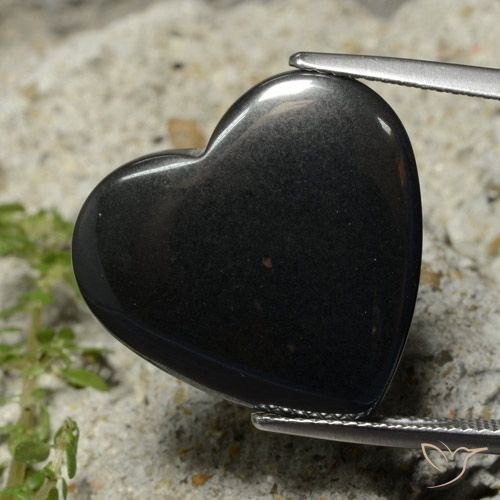
At Mohs 10, black diamond is the hardest material available in commercial jewelry. Its opaque appearance comes from graphite and mineral inclusions within the diamond matrix, combined with fracture patterns that absorb light.
Treated black diamond and natural carbonado look similar to the eye, but they are distinguished under laboratory examination by their crystal structure and inclusions. Treated stones are far more common in commercial jewelry markets.
How Black Diamond Compares
| Property | Black Diamond | Black Onyx | Black Spinel |
|---|---|---|---|
| Hardness | 10 | 7 | 8 |
| Price / carat | $$ Mid-range | $ Budget | $$ Mid-range |
| Rarity | Treated common, natural rare | Common | Moderate |
| Best For | Engagement, heirloom | Beads, costume jewelry | Wearable rings |
Meaning and Symbolism
Black diamond has a distinctly modern reputation in commercial jewelry, having risen to mainstream visibility only in the late twentieth century. Natural carbonado was known to diamond prospectors and industrial users since the nineteenth century, but its use in fashion jewelry is a recent development.
High-profile black diamond pieces in luxury jewelry collections have driven contemporary demand.
In modern crystal healing tradition, black diamond is associated with inner strength, protection, and the ability to transform adversity. Practitioners often describe it as a stone for readers navigating major life challenges, because its opaque darkness and extreme hardness are read as symbols of unbreakable fortitude.
Some traditions place black diamond alongside black tourmaline and onyx as premier protective stones.
Natural carbonado carries additional mystique because of its debated cosmic-impact origin theory, with practitioners sometimes framing it as a stone of stellar memory. This interpretation extends into modern crystal grid work focused on ancient wisdom and cosmic connection.
Treated black diamonds, being ordinary diamonds modified by irradiation, are not typically included in this cosmic lineage. The distinction between natural and treated origin matters more in metaphysical practice than in visual appearance for most readers.
Historical Timeline
Healing Tradition
Emotional
Practitioners believe black diamond is a fortress stone, traditionally associated with resilience, unshakeable boundaries, and the capacity to endure difficult seasons. In crystal healing tradition, it is said to support readers through betrayal, loss, career setbacks, or extended periods of personal reinvention.
Many readers wear black diamond rings or pendants as daily reminders of their own strength. Practitioners often pair black diamond with onyx for protective grounding and with rose quartz when the strength needs to be balanced by softness.
Crystal workers typically describe black diamond as a stone of quiet power rather than dramatic assertion, which suits readers seeking composed strength through public or professional challenges.
Because natural carbonado is rare and treated black diamonds are the commercial norm, many practitioners acknowledge both as valid carriers of this modern protective tradition. Readers seeking specifically ancient lineage energy often prefer natural carbonado when available.
Spiritual
In crystal healing tradition, black diamond is linked with the root and Earth Star chakras, zones practitioners associate with deep grounding and connection to ancestral lineage. The stone's opacity and darkness are read as a portal to what crystal workers describe as subterranean wisdom.
Many readers place black diamond in grounding grids alongside black tourmaline and hematite.
Natural carbonado carries an extra layer of cosmic association in modern practice because of the debated supernova-origin hypothesis. Practitioners working with stellar lineage sometimes treat carbonado as a starseed stone, linking it to ancient cosmic memory.
Treated black diamond is typically worked with in more earthbound protective grids. Black diamond pairs with clear quartz in amplified shielding grids and with selenite for balancing light and shadow energies. Crystal workers often reserve black diamond jewelry for specific ritual periods rather than daily carry.
Physical
Practitioners believe black diamond is traditionally associated with overall vitality, endurance, and what they describe as physical resilience during demanding seasons. Folklore links the stone with stamina, recovery from injury, and physical strength, framed as supportive companionship rather than medical treatment.
Many readers wear black diamond as rings or pendants during training programs, athletic competition, or long recovery periods. The stone is not a substitute for healthcare and practitioners are careful to describe its role as accompanying rather than treating.
Some crystal workers suggest black diamond for older readers seeking a signifier of continued strength and vitality. Given diamond's extreme hardness and chemical stability, black diamond is also considered one of the safer stones for direct-contact rituals among harder gems.
Zodiac, Birthstone and Gifts
Black diamond is sometimes offered as an alternative for April alongside traditional colorless diamond, and astrologers often pair it with Capricorn and Scorpio for their depth and resilience.
For Capricorn readers drawn to discipline and long-term goals, black diamond is often recommended as a tangible reminder of endurance. For Scorpio readers, the stone's opacity and mystery echo the sign's depth. Practitioners sometimes pair black diamond with obsidian for Scorpio and with garnet for Capricorn in small zodiac kits.
Care and Cleansing
Black diamond is one of the easiest stones to maintain. Warm soapy water and a soft brush handle body oils and daily dust, and black diamond tolerates ultrasonic and steam cleaning when the setting allows it. The material is chemically stable and does not react to most household cleaners.
Fractured treated stones should avoid ultrasonic baths because vibration can propagate internal fractures.
Moonlight, sound cleansing, and smoke cleansing are all traditional and safe. Many practitioners rest black diamond on selenite overnight as a gentle energetic reset between wearings. Dry salt cleansing is acceptable for a few hours, though saltwater soaks should be avoided on set pieces because saltwater can corrode metal mountings.
Sunlight does not fade black diamond, so brief sun bathing is safe and sometimes described as a recharging practice by crystal workers. Ultraviolet fluorescence is rare in black diamond and does not figure in standard cleansing routines.
For natural carbonado specimens, some practitioners prefer sound or moonlight cleansing over water methods as a matter of tradition, though there is no mechanical risk from water.
- DO clean black diamond in warm soapy water with a soft brush regularly.
- DO use ultrasonic cleaners only on non-fractured treated or natural stones.
- DO store black diamond separately to avoid scratching softer jewelry pieces.
- DO NOT subject fractured black diamonds to steam or thermal shock.
- DO remove black diamond rings before heavy industrial or demolition work.
- DO keep a lab certificate and insurance appraisal for any significant natural carbonado.
- Note: most commercial black diamond is irradiated and heat-treated, not natural carbonado.
Real vs Fake
Genuine black diamond shows a distinctive opaque luster under bright light and weighs correctly for its size at specific gravity 3.52. The material registers as diamond on thermal conductivity testers, which is the single most reliable at-home diagnostic.
Under strong magnification, inclusions of graphite and mineral impurities are typical in both natural and treated stones.
Common imitations include black onyx, black spinel, hematite, and treated sapphire. None of these reach Mohs 10 hardness, and thermal testers easily distinguish them from genuine diamond.
Black spinel at Mohs 8 is the closest look-alike and is often used in accent jewelry. Coated colored stones and resin casts are also occasionally misrepresented as black diamond.
Natural carbonado versus treated black diamond requires laboratory examination to distinguish. A gemological laboratory can identify carbonado by its polycrystalline structure visible under microscopy, while treated black diamonds are single crystals with distinct radiation inclusions.
For any significant purchase, a lab certificate specifying treatment status and origin is standard, and reputable sellers disclose whether a stone is natural carbonado or treated diamond.
Black Diamond Jewelry & Gifts
Black diamond spans a wide price range depending on treatment status and size. Treated black diamonds typically cost $100 to $500 per carat for small sizes and $500 to $3,000 per carat for large clean stones.
Natural carbonado is far rarer and commands $500 to $5,000 per carat for significant specimens, with top pieces reaching higher in collector auctions. Most commercial black diamond jewelry uses treated stones, which makes the material accessible at mainstream engagement-ring price points.
Treatment involves irradiation followed by heat treatment to produce the opaque black appearance, and this process is stable and widely accepted in the trade when disclosed. Genuinely natural carbonado commands a premium and should carry laboratory documentation.
For jewelry, favor eye-clean stones with minimal visible inclusion on the table. Ask sellers directly whether a stone is natural or treated, and expect honest disclosure along with a lab certificate for any significant purchase.
Where to Buy Black Diamond
Affiliate disclosure: Some links below earn us a small commission at no extra cost to you. See our affiliate disclosure page.
Handmade, raw, and tumbled pieces from independent sellers worldwide.
Shop Black Diamond on Etsy →Accessories, tools, and specimen sets with fast Prime delivery.
Shop Black Diamond on Amazon →Certified loose gemstones graded and photographed for online buyers.
Shop Black Diamond on GemSelect →Pairs Well With


Where Black Diamond Is Found


