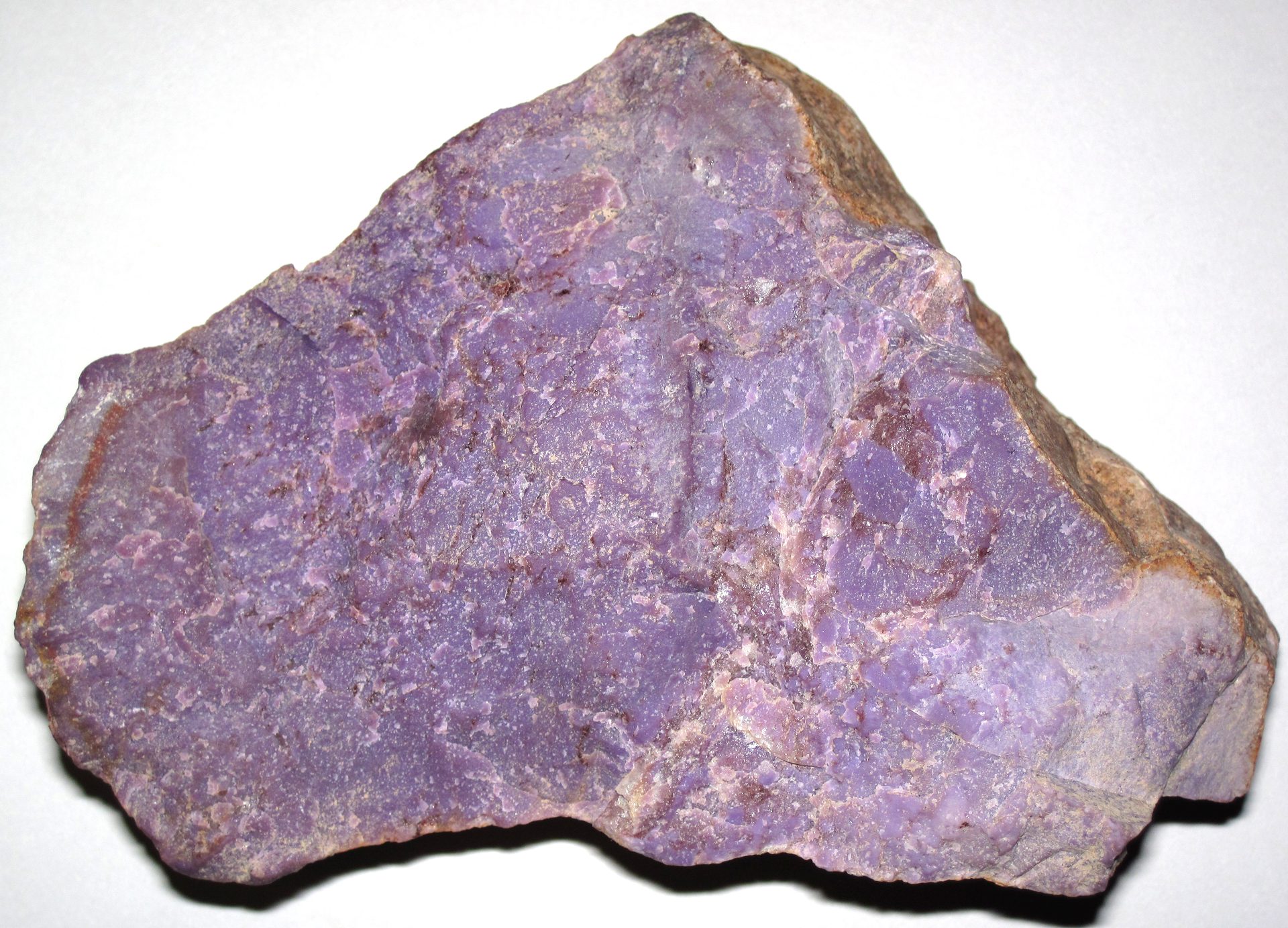
Jadeite Lavender
Myanmar's rarest jadeite color - soft violet to lavender caused by manganese impurities in a stone prized across East Asian cultures for.
- Lavender jadeite gets its purple color from trace amounts of manganese - the same element responsible for the purple in amethyst, though through different chemical mechanisms.
- The toughness of jadeite - its resistance to breaking - exceeds that of diamond, even though diamond is harder on the Mohs scale.
- The Empress Dowager Cixi was said to have been buried with over 100 pieces of jadeite jewelry, including lavender varieties.
- Myanmar (Burma) is so dominant in jadeite production that geologists consider the Hpakant region essentially the world's only significant commercial jadeite deposit.
- A top-quality lavender jadeite bangle can sell for more per gram than platinum jewelry of equivalent weight.
- Fine jewelry buyers seeking a purple stone with exceptional toughness and cultural prestige
- Collectors of rare jadeite varieties who already own imperial green and want the next tier
- Gift-givers with significant budgets marking a milestone birthday or engagement
- Practitioners of Chinese or East Asian spiritual traditions who honor jade's cultural significance
- Investment-minded gem buyers who understand that fine lavender jadeite appreciates over decades
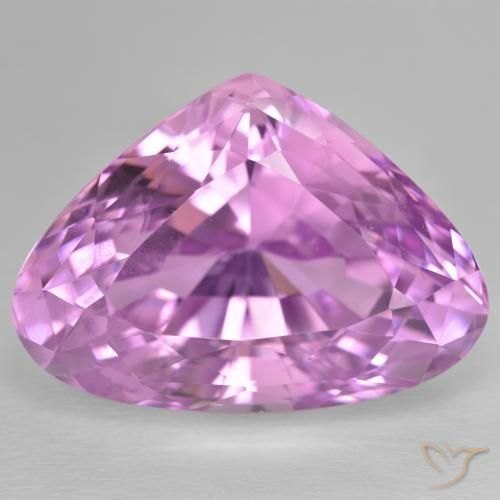
- Budget buyers - quality lavender jadeite starts at hundreds and reaches hundreds of thousands; consider amethyst or kunzite instead
- Buyers wanting maximum brilliance - jadeite has a waxy luster, not the sparkle of faceted gemstones like tanzanite
- Anyone who cannot verify treatment status - the B-jade and C-jade trade is pervasive and untreated lavender jadeite requires certification
What Is Jadeite Lavender?
Jadeite Lavender is a variety of jadeite - the rarer and more valuable of the two jade minerals - distinguished by its soft violet to lavender-purple coloration caused by trace manganese impurities within the sodium aluminum silicate mineral structure. It rates 6.5 - 7 on the Mohs hardness scale.
True jade refers to two entirely different minerals: *jadeite* (NaAlSi2O6) and nephrite (a calcium magnesium iron silicate). Jadeite is geologically rarer, forms at higher pressures in subduction zones, and produces the most translucent and vibrant jade colors.
The color range of lavender jadeite spans from pale silver-violet to deep violet-purple. The most prized specimens combine a medium lavender saturation with high translucency - the classic jade quality called *feicui* in Mandarin, referring to a watery translucency where light seems to glow from within.
Fine lavender jadeite in this quality tier rivals imperial green jadeite in value and cultural prestige in Chinese, Hong Kong, and Taiwanese fine jewelry markets.
**Myanmar's Kachin State** - specifically the Hpakant mining area - supplies virtually all gem-quality jadeite globally. The stone forms in serpentinized ultramafic rocks where subduction-zone pressures created conditions specific enough to produce jadeite's tightly interlocking crystal structure, which gives jade its exceptional toughness despite moderate hardness.
No other commercial deposit produces gem-quality jadeite at scale, making Myanmar provenance near-universal for fine material.
How Lavender Jadeite Compares
| Property | Lavender Jadeite | Amethyst | Kunzite |
|---|---|---|---|
| Toughness | Exceptional (interlocked) | Good | Moderate |
| Hardness | 6.5 - 7 | 7 | 6.5 - 7 |
| Price / carat | $$ Mid-range | $ Budget | $ Budget |
| Best For | Heirloom jewelry | Daily wear, healing | Special occasion |
Meaning and Symbolism
Jade holds perhaps the deepest cultural significance of any mineral in human history, with over 7,000 years of continuous use across Chinese, Mesoamerican, and Polynesian civilizations. In Chinese tradition, *yu* (jade) represents the five Confucian virtues: benevolence, wisdom, courage, justice, and purity. Emperors wore jade and were buried with it.
The ancient ideal was to embody jade's qualities - its sound when struck, its smoothness, its durability.
Lavender jadeite carries additional associations with the Divine Feminine, grace, and spiritual refinement within Chinese jade tradition. **Guanyin** - the bodhisattva of compassion - is frequently carved in lavender jadeite, combining the stone's purple association with spiritual elevation and jade's ancient connection to virtue.
Lavender jade carvings of Guanyin are among the most sought-after devotional objects in contemporary Chinese Buddhist practice.
In crystal healing tradition, lavender jadeite is associated with the Heart, Third Eye, and Crown chakras simultaneously - a triple activation said to align earthly love with spiritual wisdom.
Practitioners describe it as bridging the warmth of heart-centered work with the clarity of higher consciousness, making it suitable for anyone navigating the intersection of emotional life and spiritual growth. Its rarity is seen not as a limitation but as confirmation of its elevated frequency.
Historical Timeline
Healing Tradition
Emotional
Practitioners believe Lavender Jadeite carries a uniquely refined emotional healing frequency - one that works gently on deeply held patterns rather than through sudden release or intensity. Many find it supports the development of emotional grace: the ability to feel fully without being overwhelmed, to remain open without losing center.
It is said to be particularly supportive for those who tend toward perfectionism or self-criticism, inviting a softer and more forgiving relationship with one's own nature.
Crystal healing tradition associates lavender jade with the cultivation of inner dignity - a quiet knowing of one's worth that does not require external validation. Those navigating grief while maintaining professional or social composure often describe it as a quietly sustaining companion.
Spiritual
In crystal healing tradition, Lavender Jadeite is associated with the meeting point of earthly virtue and spiritual grace - the quality described in Chinese tradition as embodying jade itself.
Practitioners use it in meditation to cultivate what they describe as refined awareness: the capacity to perceive spiritual reality with both sensitivity and stability, neither grasping nor withdrawing. The stone is said to support devotional practices of all kinds, particularly those honoring divine feminine figures like Guanyin, Kuan Yin, or Mary.
Many find it amplifies prayer that is oriented toward compassion and service rather than personal gain. Its Crown chakra associations link it to experiences of spiritual clarity and unity consciousness in some traditions.
Physical
Practitioners traditionally associate Lavender Jadeite with the kidneys, adrenal system, and the body's capacity to sustain energy without depletion. In traditional Chinese medicine-adjacent wellness practices, jade has been used for thousands of years in jade rollers and gua sha tools.
Lavender jadeite is sometimes used in these applications for its perceived cooling and harmonizing properties. The stone is said to support the nervous system during periods of chronic stress, working slowly but consistently toward restoration.
No crystal can treat or cure any physical condition, and professional medical advice should always be sought for health concerns.
Zodiac, Birthstone and Gifts
Lavender Jadeite connects with Virgo through jade's ancient associations with virtue, refinement, and practical wisdom - qualities Virgo embodies in its earthy, discerning expression. Libra finds resonance in the stone's graceful beauty and its associations with balance between emotional depth and spiritual elevation.
Taurus, Venus-ruled and drawn to the finest earthly pleasures, aligns with jadeite's status as the most culturally prestigious gemstone in East Asia and its tactile smoothness when polished. All three signs are earth or Venus-associated, reflecting jade's ancient role as the ultimate material expression of earthly wisdom elevated to spiritual virtue.
Care and Cleansing
Lavender Jadeite is a durable stone that tolerates most cleansing methods comfortably. Running water is safe and effective - rinse under cool running water for 30 to 60 seconds and dry with a soft cloth.
The stone's exceptional toughness means it is not vulnerable to water in the way softer or more porous stones are. Avoid hot water or steam, which can affect any polymer-filled or resin-stabilized jade (common in lower grades).
Moonlight cleansing aligns particularly well with lavender jadeite's spiritual associations - place outdoors or on a windowsill during a full moon. Selenite charging plates work for regular maintenance. Smudging with sandalwood or high-quality incense reflects the stone's East Asian ceremonial tradition.
Direct sunlight is safe for brief periods but prolonged intense sun exposure is unnecessary given the stone's stable color. Treat your jadeite gently and clean jewelry settings periodically with a soft brush and mild soap solution, rinsing thoroughly.
- DO verify treatment status (A-jade vs B-jade vs C-jade) before purchase - treatment significantly affects value and care requirements.
- DO clean untreated A-jade with mild soap and water; polymer-filled B-jade should avoid prolonged water exposure.
- DO NOT use ultrasonic or steam cleaners on any jadeite - particularly polymer-filled B-jade which will degrade.
- DO NOT store loose jadeite bangles where they can knock against each other - chips will occur despite the stone's toughness.
- DO NOT expose to harsh chemicals or solvents - these can damage both the stone surface and any metal settings.
- Note: Fake jade is pervasive; quartzite, aventurine, and dyed serpentine are commonly sold as jade - request gemological laboratories or lab certification for purchases over $200.
Real vs Fake
The jade trade is one of the most adulterated in gemology. Three treatment grades exist: A-jade is untreated natural jadeite (the most valuable); B-jade has been bleached and polymer-filled to improve clarity and color; C-jade has been dyed in addition to bleaching and filling.
All three can appear similar to the untrained eye. For any lavender jadeite purchase over $200, request a laboratory certificate from gemological laboratories, GRS, or a recognized Hong Kong or Taiwanese gem lab.
Under a loupe, genuine natural lavender jadeite shows an interlocking crystal structure visible as a subtle fibrous or mosaic texture - the characteristic 'orange peel' surface texture appears under magnification on polished surfaces.
B-jade often shows a network of fine cracks under ultraviolet light (from the bleaching process) filled with polymer that fluoresces. C-jade shows dye concentrated in natural fractures rather than uniformly distributed through the crystal structure.
Common simulants include aventurine quartz, dyed quartzite, serpentine, and glass - all sold as jade in markets ranging from street vendors to online retailers. Glass imitations feel lighter (lower specific gravity) and lack the cold thermal feel of true jade against skin.
A thermal conductivity tester - available for under $30 - can distinguish jadeite from glass and most quartz simulants quickly and reliably.
Jadeite Lavender Jewelry & Gifts
Lavender jadeite is graded by the 4 Cs applied specifically to jade: color (saturation and hue of the lavender), clarity (absence of brown oxidation spots and veining), texture (fineness of the crystal interlocking - finer is better), and size.
The ideal lavender jadeite has a medium violet saturation - not too pale, not so dark it becomes purple-brown - combined with high translucency that creates the prized luminous glow.
Treatment status is the single most important purchasing factor. A-jade (untreated) at the same apparent quality as B-jade can cost 10x more. Always purchase with laboratory certification for significant investment pieces.
The primary reliable sources are established auction houses in Hong Kong (major auction houses, major auction houses, Bonhams), certified dealers who sell laboratory-certified material, and a small number of US dealers who specialize in Myanmar jadeite.
Price ranges are vast: small untreated lavender jadeite cabochons start around $50 to $200 for lower translucency material. Fine translucent lavender jadeite runs $500 to $5,000 per carat. Exceptional museum-quality pieces reach six and seven figures at auction.
Budget-conscious buyers who want the jade connection might consider certified B-jade at disclosed treatment status, which is dramatically less expensive.
Where to Buy Jadeite Lavender
Affiliate disclosure: Some links below earn us a small commission at no extra cost to you. See our affiliate disclosure page.
Handmade, raw, and tumbled pieces from independent sellers worldwide.
Shop Jadeite Lavender on Etsy →Accessories, tools, and specimen sets with fast Prime delivery.
Shop Jadeite Lavender on Amazon →Certified loose gemstones graded and photographed for online buyers.
Shop Jadeite Lavender on GemSelect →Pairs Well With


Where Jadeite Lavender Is Found


