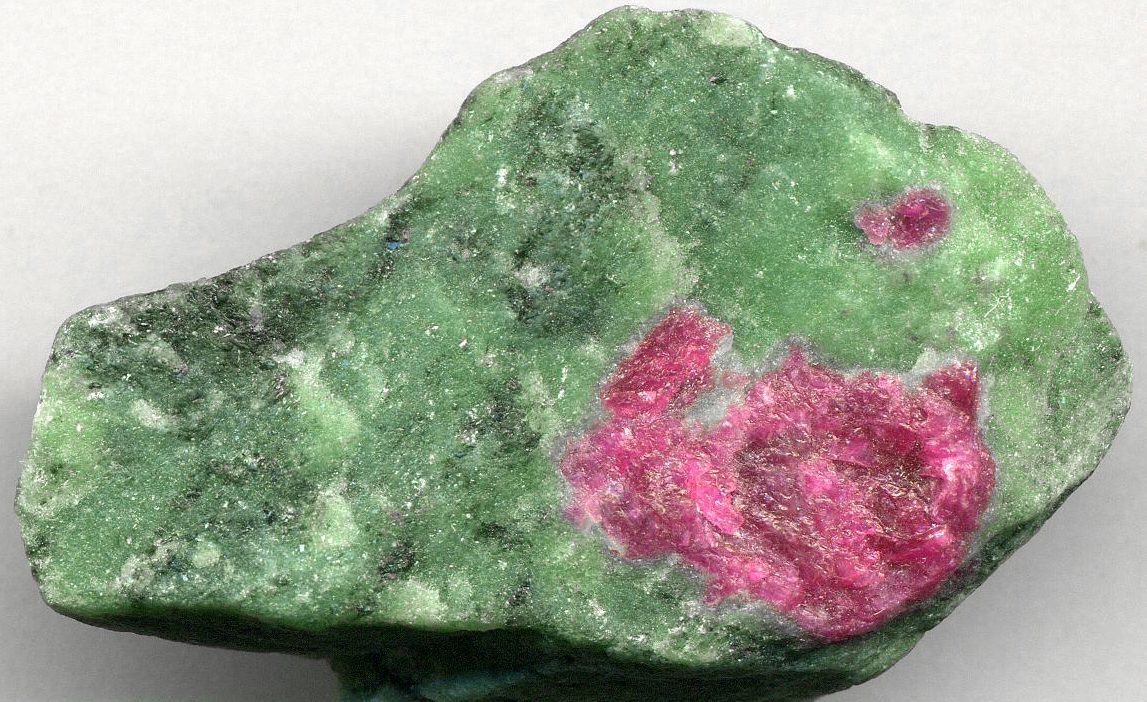
Zoisite with Ruby
Tanzania's dramatic combination of vivid green zoisite and red ruby corundum in one specimen - representing the natural marriage of heart.
- The ruby in zoisite-ruby is genuine corundum - the same mineral species as gem rubies - just opaque and non-transparent rather than facet-quality.
- The Longido mining area in Tanzania is the world's only significant commercial source of this specific green zoisite-ruby combination.
- Zoisite is a calcium aluminum sorosilicate - a chemical cousin of tanzanite, which is the blue-violet variety of zoisite.
- The same Arusha region of Tanzania that produces zoisite-ruby is also the main source of tanzanite, making it one of the world's most mineralogically distinctive areas.
- Large zoisite-ruby boulders are sometimes carved into decorative objects, figurines, and even furniture by Tanzanian artisans.
- Practitioners wanting both Heart (green) and Root/passion (red) energy in a single stone
- Collectors interested in unique combo specimens where two distinct minerals occur naturally together
- Gift-givers looking for a visually striking green-and-red stone with an exotic Tanzanian origin story
- Anyone working with themes of passion balanced by nurturing growth and emotional intelligence
- Sculpture and carving collectors - the soft zoisite carves well and is frequently made into figures
- Fine jewelry buyers needing a faceted transparent gem - the stone is opaque and primarily used as cabochons or carvings
- Collectors wanting a pure ruby specimen - ruby content in zoisite is non-gem grade opaque material
- Those needing low-maintenance care - the combination of different hardnesses requires careful handling
What Is Zoisite with Ruby?
Zoisite with Ruby (also known commercially as *anyolite*, from a Masai word meaning 'green') is a naturally occurring combination rock from Tanzania in which green zoisite - a calcium aluminum silicate - contains embedded opaque red corundum (ruby) alongside occasional black hornblende crystal patches. It rates 6 - 9 (zoisite 6.5, ruby 9) on the Mohs hardness scale.
The formation is not a single mineral but a metamorphic rock: mafic schists in Tanzania's Lelatema Mountains underwent metasomatic alteration, introducing aluminum-rich fluids that converted existing minerals into zoisite and crystallized corundum simultaneously.
The **ruby inclusions** in this stone are genuine corundum (Al2O3 with chromium coloring), the same mineral species as gem rubies, but opaque and non-gem quality.
The value of the combination lies in the visual drama - vivid emerald-green to medium green zoisite contrasting with crimson-red ruby and jet-black hornblende - rather than in the ruby's gem quality. Zoisite's Mohs hardness of 6.5 coexists with ruby's Mohs 9, creating a mixed-hardness rock that requires thoughtful handling.
The primary locality is the Longido district in the Arusha region of northern Tanzania, near the Kenyan border. The deposit was first described commercially in 1954 by Austrian geologist Julius Tschermak, and the trade name anyolite was introduced by Tom Blevins in 1967.
Tanzania maintains exclusive commercial production of this particular variety, making Tanzanian provenance essentially universal for all zoisite-ruby material in the market.
How Zoisite with Ruby Compares
| Property | Zoisite with Ruby | Unakite | Bloodstone |
|---|---|---|---|
| Color Combo | Green + Red + Black | Pink + Green | Green + Red spots |
| Hardness | 6.5 - 9 (mixed) | 6 - 7 | 6.5 - 7 |
| Price / piece | $ Budget | $ Budget | $ Budget |
| Best For | Display, carving, healing | Heart, gifts | Vitality, grounding |
Meaning and Symbolism
Zoisite with Ruby arrived in Western crystal healing tradition in the 1960s through the same Tanzania gem boom that brought tanzanite to international attention.
Practitioners immediately resonated with the symbolic reading of the two minerals: green zoisite representing growth, nature, and the nurturing heart, while red ruby brought passion, courage, and vital life force.
The combination was interpreted as a rare natural integration of Heart and Root chakra energies - yin and yang, fertility and desire, the qualities that together sustain life.
African healing traditions in Tanzania and among the Masai communities near Longido have their own relationship with anyolite, where vivid green stones from the earth carry associations with abundance, rain, and the fertility of the land.
The name anyolite reflects this local cultural context - the stone was significant to the regional landscape before it entered global trade.
**Passion with wisdom** is the central interpretive theme in modern crystal healing tradition for this stone. Practitioners describe it as encouraging desire and creative drive (ruby) to be guided by emotional intelligence and nurturance (zoisite) rather than acting impulsively.
This makes it a particularly popular stone for those working on integrating ambition with self-care, or romantic passion with stable long-term love.
Historical Timeline
Healing Tradition
Emotional
Practitioners believe Zoisite with Ruby offers a distinctive emotional healing combination: the ruby element said to reconnect people with their passion and vital life energy when it has faded through grief, depression, or long exhaustion, while the zoisite nurtures that rekindled energy with the patience and wisdom of the heart.
Many find it helps overcome emotional apathy - the state where nothing feels compelling or alive. Crystal healing tradition associates it with restoring joy in creative and romantic life without demanding that joy look a particular way.
The stone is described as honoring desire as a sacred, life-sustaining force rather than something to be managed or minimized.
Spiritual
In crystal healing tradition, Zoisite with Ruby represents the integration of Earth vitality and spiritual wisdom - a stone that honors both the body's passions and the soul's more refined impulses as equally sacred.
Practitioners use it to dissolve the split between spiritual aspiration (often equated with transcending physical desire) and physical aliveness (often dismissed as unspiritual). The stone is said to help practitioners embody their spiritual awareness rather than using it to escape from life.
Many find it grounding for spiritual practices that have become too abstract or detached from felt physical experience.
Physical
Practitioners traditionally associate Zoisite with Ruby with vitality, circulation, and physical courage - the ruby element connecting to the heart muscle and blood, the zoisite to the immune system and cellular growth and renewal. Crystal wellness tradition has long linked red stones to circulation support and green stones to growth and recovery.
This combination is used by practitioners in body layouts placed at both the Heart and Root positions simultaneously, intending to circulate vital energy through the full vertical axis. No crystal can treat or cure any physical condition, and professional medical advice should always be sought for health concerns.
Zodiac, Birthstone and Gifts
Zoisite with Ruby connects most naturally to Aries through the ruby's traditional Aries associations - courage, initiative, passion, and the life force energy Mars governs. Aries practitioners find the stone amplifies their natural drive while the zoisite tempers it with emotional grounding.
Gemini appears in some systems due to the stone's dual-nature combination of two distinct minerals in one. Cancer, the sign most connected to nurturing, the home, and emotional depth, resonates with zoisite's green heart energy and the stone's integration of passion with emotional wisdom.
Care and Cleansing
Zoisite with Ruby is straightforward to cleanse. Running water is safe - rinse under cool water for 30 to 60 seconds. The zoisite at Mohs 6.5 and ruby at Mohs 9 are both stable in water, and no soluble minerals are present.
Sunlight exposure is fine and will not affect the stone's color, as both the green (iron in zoisite) and red (chromium in corundum) are stable under UV.
Earth burial is a particularly meaningful cleanse for this deeply Tanzanian Earth-born stone - bury overnight in garden soil and rinse clean the following day. Moonlight is effective for the heart energy aspects of the stone. Selenite plates and smudging with sage or cedar are both appropriate.
Recharge at each new moon during a growth or passion intention cycle to maintain the stone's dual energetic quality.
- DO handle with respect for the different hardnesses within the stone - avoid abrasion on the zoisite (softer) portions.
- DO store separately from harder minerals that could scratch the zoisite surface layer.
- DO NOT use ultrasonic cleaners - the boundary between minerals with different hardnesses can be a stress point under vibration.
- DO NOT expose to harsh chemicals or strong acids - zoisite is more chemically vulnerable than the ruby portions.
- Note: Large carved pieces can have structural vulnerabilities at mineral boundaries - handle display pieces carefully to prevent chipping.
Real vs Fake
Genuine Zoisite with Ruby is a single-source stone from Tanzania with a distinctive appearance not easily replicated. The vivid emerald-green of high-quality zoisite is distinctive - imitation dyed materials tend toward more uniform, less naturalistic green tones.
The red ruby inclusions in genuine specimens show as opaque, slightly translucent patches with a characteristic corundum luster distinct from dyed epoxy fills or painted inclusions.
Dyed quartzite or serpentine with painted red patches occasionally appears in markets as an imitation, particularly in tourist settings near Tanzanian gem markets. The weight test is useful - genuine zoisite-ruby rock has a specific gravity of 3.1 to 3.38, making it noticeably heavier than quartzite simulants of equal size.
The black hornblende patches characteristic of genuine material are difficult to fake and rarely present in imitations.
For typical collector and healing market purchases, fraud is uncommon - the stone lacks the value premium that motivates sophisticated deception. The main risk is mislabeled dyed stones from less scrupulous sellers. Purchase from established gem dealers or Tanzanian specialty importers. Request basic locality documentation for significant purchases over $50.
Zoisite with Ruby Jewelry & Gifts
Zoisite with Ruby is an affordable and accessible stone sold in forms ranging from tumbled pebbles to large rough specimens and decorative carvings. Small tumbled pieces range from $10 to $30. Quality cabochons for jewelry settings cost $20 to $80.
Large rough specimens or polished slabs range from $50 to $300+ depending on size and color quality.
The primary value factor is the vividness and proportion of the green zoisite - rich, saturated emerald green versus pale or grayish green commands significant premiums. Secondary factors include the visibility and size of ruby inclusions and the aesthetic contrast between the green, red, and black zones.
Specimens where all three colors are clearly visible in good proportion are the most desirable.
All commercial material comes from Tanzania. Sellers unable to confirm Tanzanian origin should be approached with skepticism. The stone is widely available at US gem shows, specialty crystal shops, and online dealers who work with African mineral importers. Pricing above $30 per tumbled piece should be justified by exceptional color quality.
Where to Buy Zoisite with Ruby
Affiliate disclosure: Some links below earn us a small commission at no extra cost to you. See our affiliate disclosure page.
Handmade, raw, and tumbled pieces from independent sellers worldwide.
Shop Zoisite with Ruby on Etsy →Accessories, tools, and specimen sets with fast Prime delivery.
Shop Zoisite with Ruby on Amazon →Certified loose gemstones graded and photographed for online buyers.
Shop Zoisite with Ruby on GemSelect →Pairs Well With


Where Zoisite with Ruby Is Found


