Cordierite
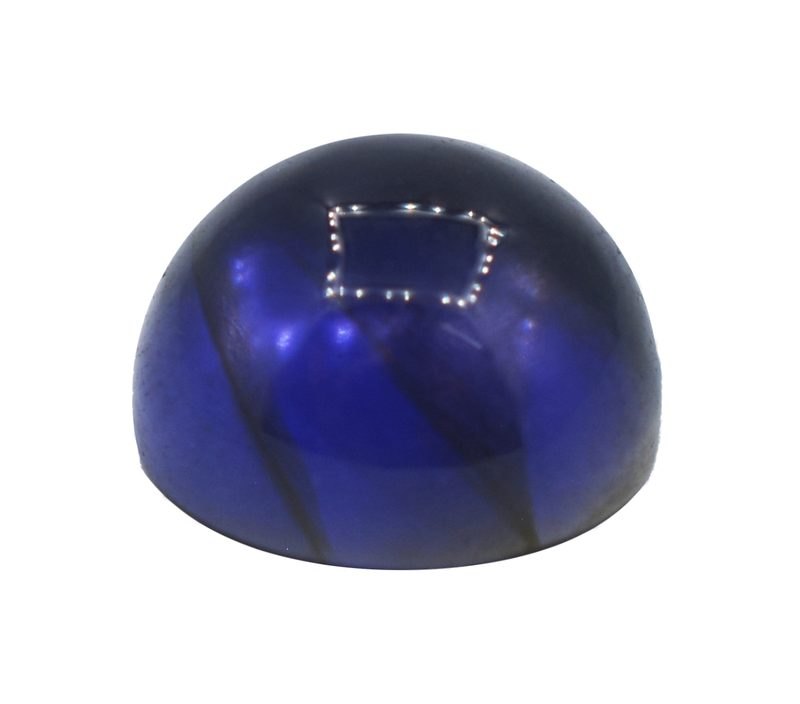
The mineralogical name for iolite, cordierite is a violet-blue silicate practitioners associate with vision and inner navigation.
- Cordierite shows three different colors from three viewing directions, the most dramatic pleochroism in common gemstones.
- The Viking sunstone legend in Norse sagas may refer to cordierite, used to find the sun's direction through cloudy skies.
- A cordierite crystal recovered from a 16th-century shipwreck off Alderney supports the navigation-stone hypothesis.
- Cutters orient cordierite carefully because the wrong axis gives a yellow-brown or gray look instead of the prized blue.
- Bloodshot iolite contains hematite inclusions that scatter red flashes through the violet-blue body color.
- Buyers seeking a violet-blue alternative to sapphire or tanzanite at lower price
- Collectors fascinated by strong pleochroism and Viking sun-stone history
- Practitioners working with third eye chakra and intuitive vision
- Travelers and writers drawn to the navigational symbolism
- Jewelry buyers wanting a conversation piece with mineralogical depth
What Is Cordierite?
Cordierite is the mineralogical name for the gem more commonly sold as iolite. It is a magnesium iron aluminum cyclosilicate that forms in contact-metamorphic and pegmatitic environments, especially where aluminum-rich sediments meet hot intrusive rocks. The mineral was named in 1813 for French geologist Pierre Louis Cordier, who first described it scientifically.
Color in cordierite ranges from violet-blue and blue-purple to gray-blue and yellowish-brown, depending on iron content and orientation. The signature feature is exceptional pleochroism: the same crystal can appear deep blue from one direction, pale gray from the second, and yellow-brown from the third.
This three-color shift made cordierite famous as the legendary Viking sunstone, said to have helped sailors locate the sun's direction through cloud cover by polarized light.
Cordierite forms in stubby orthorhombic prisms, but most gem material comes from alluvial gravels in Sri Lanka, India, and Madagascar. Cutters orient stones to maximize the deep blue axis, since the violet-blue face is what the trade considers ideal.
Bloodshot iolite is a rare variety with internal hematite inclusions that scatter red flashes through the blue body color. The stone is sometimes confused with tanzanite, blue sapphire, or even amethyst at quick glance, but its three-axis pleochroism is distinctive.
How Cordierite Compares
| Property | Cordierite (Iolite) | Tanzanite | Sapphire |
|---|---|---|---|
| Hardness | 7 - 7.5 | 6 - 7 | 9 |
| Price / carat | $ Budget | $$$ Premium | $$$ Premium |
| Pleochroism | Strong (3 colors) | Strong (3 colors) | Moderate |
| Best For | Affordable blue jewelry | Evening jewelry | Investment, daily wear |
Meaning and Symbolism
Cordierite carries one of the most evocative legends in gemology: the Viking sunstone story. Medieval Norse texts mention a solarsteinn used by sailors to find the sun's direction through clouds and fog, and modern researchers have proposed cordierite as the leading candidate because of its strong polarization-dependent pleochroism.
Whether the legend is literal or symbolic, the navigation theme has stuck.
The mineral was formally named in 1813 for Pierre Louis Cordier, a French geologist who studied volcanic rocks. The trade name iolite, from the Greek ion meaning violet, came into wider use in the 19th century to describe gem-quality cordierite.
Today the two names coexist, with cordierite preferred by mineralogists and iolite preferred by jewelers and crystal practitioners.
In modern crystal healing tradition, cordierite is associated with vision, navigation, and the cultivation of inner sight. Practitioners believe it supports the third eye chakra and is particularly useful for readers facing decisions that require seeing clearly through external pressure.
Many find the stone helpful for writers, travelers, and people in transition. The Viking sunstone story makes cordierite a popular gift for travelers, navigators, sailors, pilots, and those starting a new chapter that requires charting a course through uncertainty. It is sometimes called the writer's stone in modern crystal lore.
Historical Timeline
Healing Tradition
Emotional
Practitioners believe cordierite supports clarity during emotional fog and confusion. In crystal healing tradition, it is said to help readers see their own situation honestly when external pressure or other people's expectations are obscuring the view.
Many find cordierite useful during life transitions that require difficult choices: career changes, ending relationships, or relocating to a new place. The Viking navigation symbolism gives the stone a quiet practical reputation: it helps the user find direction without dramatic intervention.
Because cordierite carries cool air and water elements, practitioners often pair it with warmer grounding stones like carnelian or red jasper when the emotional work involves both clear vision and physical action.
It is rarely described as a stone for catharsis or rapid mood shift; its reputation is steady, observational, and slightly melancholic in the most useful sense.
Spiritual
In crystal healing tradition, cordierite is one of the classical third eye stones. Practitioners believe its violet-blue energy supports inner vision, accurate intuition, and the discipline to act on what one sees rather than what one wishes were true.
Medieval Norse navigators are said to have used cordierite to locate the sun, and modern practitioners often extend that symbolism to spiritual navigation: finding the next true step when external signs are unclear.
Many practitioners use cordierite during meditation focused on discernment, decision-making, or the quiet work of self-honesty. The stone is also commonly recommended for writers and creative workers who need to listen carefully to their own internal sense of what wants to be made next.
Cordierite pairs well with clear quartz for amplification and with lapis lazuli for ancient-wisdom themes during contemplative practice.
Physical
Practitioners believe cordierite's cool, clear energy supports what traditions describe as the eyes, the pituitary, and the nervous system's capacity for steady focus. Folklore is thin because the stone was only formally identified in the 19th century, so most physical associations come from modern crystal writers.
Cordierite is not a substitute for medical care, and crystal traditions frame it as supportive rather than curative.
Many readers wear cordierite pendants during long screen-work days, exam preparation, or any work requiring sustained visual concentration. Practitioners sometimes place a polished cordierite on the brow during rest, echoing the third-eye placement common with sapphire and lapis lazuli.
In modern correspondences, cordierite is associated with Mercury and Saturn, suggesting both quick mental work and disciplined long study.
Zodiac, Birthstone and Gifts
Cordierite has no classical birthstone assignment, but modern crystal writers often suggest it for Sagittarius because of the navigation and travel symbolism. Astrologers traditionally associate the stone with Mercury for its mental clarity and with Saturn for its disciplined inner sight, supporting Libra and Taurus readers seeking grounded vision.
Many find cordierite especially resonant during periods of decision or transition regardless of sign, particularly when paired with a grounding stone for embodied follow-through. Water signs sometimes prefer brighter blue stones, and fire signs may find cordierite a useful counterbalance to overactive impulse.
Care and Cleansing
Cordierite is chemically stable and tolerates gentle cleaning. Lukewarm soapy water with a soft brush removes skin oils and grime safely; rinse and dry with a soft lint-free cloth. Avoid ultrasonic and steam cleaners for any cordierite with visible inclusions or fractures, since vibration can propagate stress along internal planes.
Sunlight, moonlight, smoke (sage, palo santo, cedar), and sound cleansing are all considered safe for cordierite. Many practitioners favor moonlight given the stone's quiet, reflective character, and recharge it overnight on a clear quartz cluster between major decisions.
Saltwater baths should be avoided to protect any metal mounting, but dry salt is acceptable. Cordierite does not fade in normal light exposure.
- DO clean cordierite in lukewarm soapy water with a soft brush; rinse and dry gently.
- DO NOT use ultrasonic or steam cleaners on cordierite with visible fractures or bloodshot inclusions.
- DO store cordierite separately from harder stones like sapphire and topaz.
- DO NOT subject cordierite to sudden temperature changes; thermal shock can cause stress fractures.
- DO request disclosure of any treatments, though commercial cordierite is rarely treated.
- DO use protective bezel settings for ring wear, since the stone has fair toughness but distinct cleavage.
- Note: open-back settings show off the violet-blue axis better than closed mounts.
Real vs Fake
Genuine cordierite shows distinct three-color pleochroism: deep blue from one axis, pale gray from the second, and yellow-brown from the third. A stone sold as iolite that shows only one color from every angle is not cordierite, most often blue glass, dyed quartz, or treated topaz.
A simple loupe and a dichroscope confirm the multi-color pleochroism in seconds.
Real cordierite has a refractive index between 1.52 and 1.58 and a specific gravity around 2.55 to 2.75, lighter than sapphire or tanzanite. Bubbles, swirl marks, or completely uniform color suggest glass; visible inclusion patterns of fluid pockets and crystal fragments are normal in real cordierite.
At home, you can scratch glass easily with cordierite and check for the three pleochroic colors by tilting the stone slowly under daylight. Bloodshot iolite contains hematite inclusions that should look like red metallic flecks under magnification, not random red dye.
Synthetic cordierite is produced for laboratory ceramics but is not commonly faceted as gemstones, so substitution risk is mostly about misidentified or dyed alternatives.
For higher-priced bloodshot or cat's-eye iolite, request a lab report from GIA, Mindat, and USGS. The pleochroism test alone disqualifies most fakes within seconds. Cordierite is sometimes called water sapphire historically, which is misleading; it is not corundum and not in the sapphire family.
Cordierite Jewelry & Gifts
Cordierite (sold as iolite) is one of the most affordable transparent violet-blue gemstones. Small commercial-grade faceted stones under one carat run $20 to $80 per carat. Cleaner two- to four-carat stones with deep violet-blue color and good clarity reach $80 to $200 per carat.
Premium five-carat-plus stones with strong saturation, neither too pale nor too dark, can reach $200 to $400 per carat from specialist dealers.
Bloodshot iolite is the price outlier within the species. Clean cabochons showing distinct hematite red flashes against the blue body trade for $50 to $300 each depending on size and effect quality. Cat's-eye cordierite is rare and commands collector premiums.
Cordierite is generally untreated. Heat treatment is uncommon, and the stone is sold in its natural state. Always ask about disclosure but expect untreated material from reputable dealers. Cutters charge slightly more for stones oriented to maximize the violet-blue axis, since the wrong cut yields a yellowish or gray-looking stone.
Where to Buy Cordierite
Affiliate disclosure: Some links below earn us a small commission at no extra cost to you. See our affiliate disclosure page.
Handmade, raw, and tumbled pieces from independent sellers worldwide.
Shop Cordierite on Etsy →Accessories, tools, and specimen sets with fast Prime delivery.
Shop Cordierite on Amazon →Certified loose gemstones graded and photographed for online buyers.
Shop Cordierite on GemSelect →Pairs Well With


Where Cordierite Is Found


