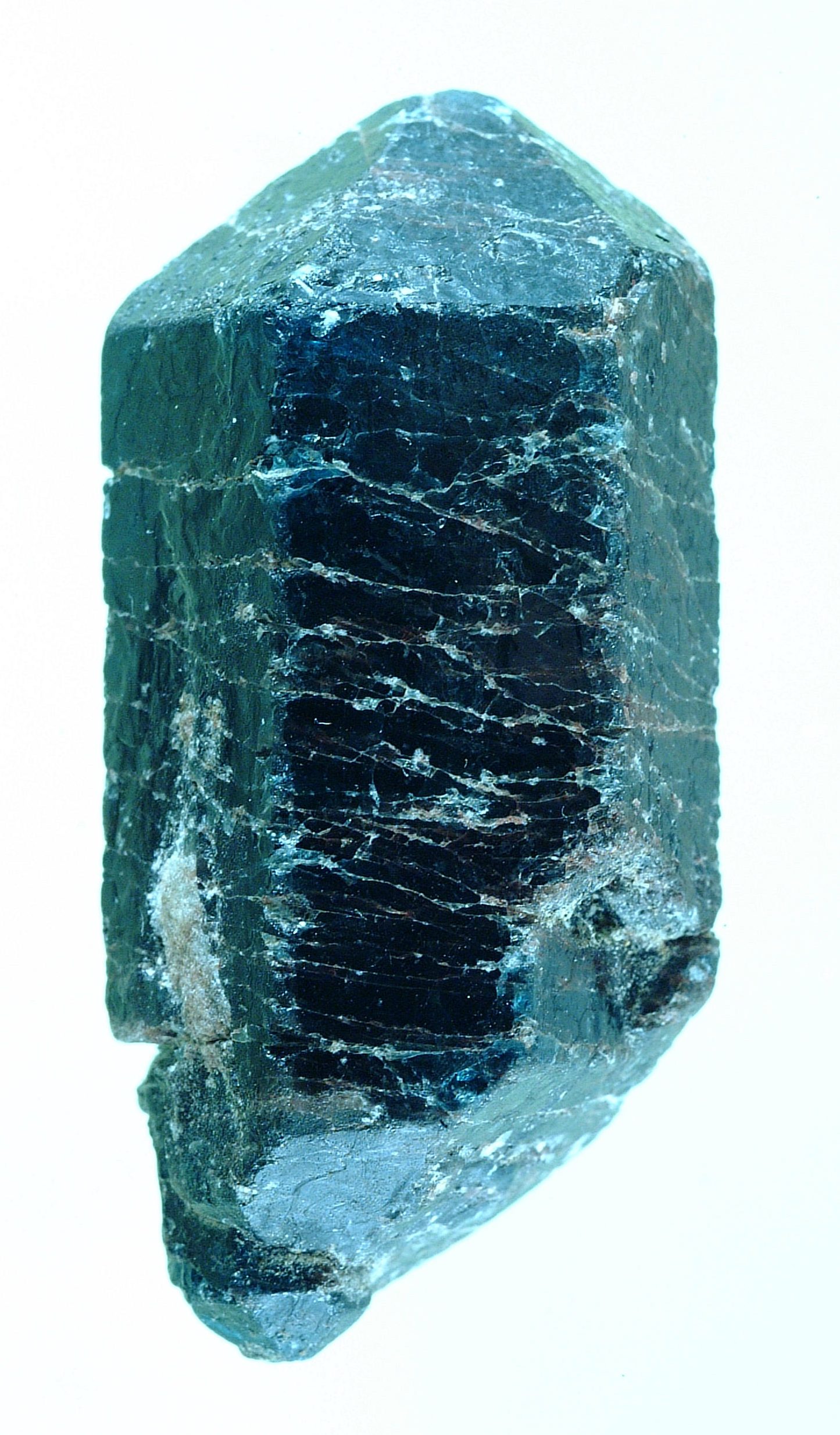
Blue Cat’s Eye Apatite
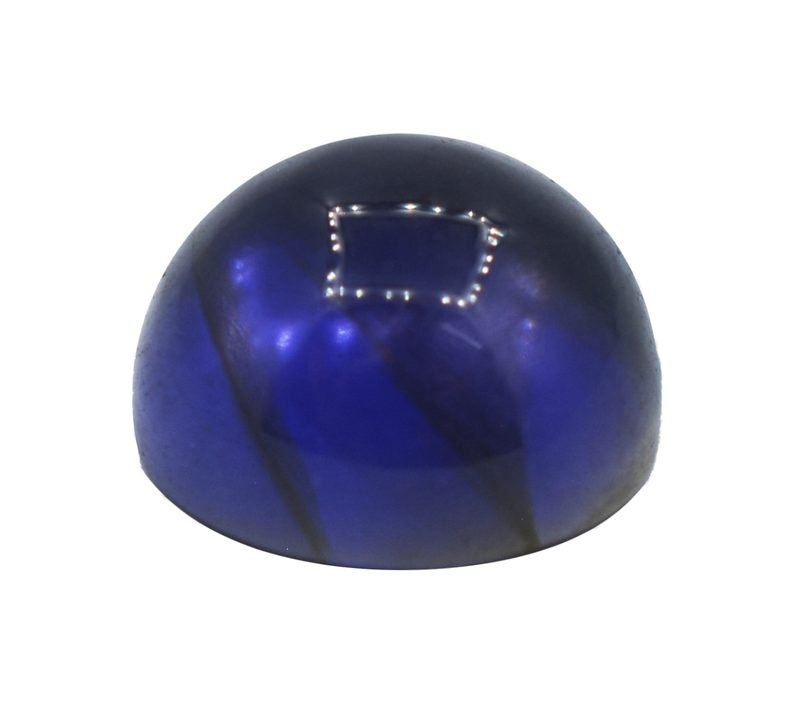
Blue apatite with a silky chatoyant cat's eye band, formed by fibrous inclusions that reflect light in a single luminous line across the.
- Apatite's name comes from the Greek word for 'deceive' - it was so frequently mistaken for other gems that mineralogists gave it a name reflecting its deceptive appearance.
- The mineral apatite is the main component of tooth enamel and bone in all vertebrates including humans - you literally have apatite in your body.
- Chatoyancy in cat's eye apatite requires fibrous inclusions to be perfectly parallel AND the gem to be cut at precisely the right orientation - both conditions make good cat's eye specimens genuinely rare.
- Blue apatite from Madagascar sometimes shows color change from blue-green in daylight to purple in incandescent light, adding a second optical phenomenon to the chatoyancy.
- Apatite fluorescence is widely variable - some specimens show no fluorescence, while others emit strong violet, yellow, or green glows under UV light, useful as an identification characteristic.
- Collectors who specifically seek chatoyant gems and want apatite as a rare, affordable example of the cat's eye effect
- Throat and third eye chakra practitioners who want a visually distinctive blue stone with optical phenomenon
- Jewelry designers seeking a unique chatoyant cabochon in an unusual blue-teal color for statement pendants
- Gemologists and students studying optical phenomena in colored stones
- Gift givers looking for a genuinely unusual and eye-catching gem under $100
- Daily-wear jewelry settings - Mohs 5 is too soft for rings and bracelets; choose teal apatite faceted for pendants instead
- Those expecting the bright, saturated cat's eye of chrysoberyl - apatite's chatoyancy is softer and more subtle
- Buyers wanting well-known or commonly recognized gemstones - cat's eye apatite is niche and requires explanation
What Is Blue Cat’s Eye Apatite?
Blue cat's eye apatite is a translucent variety of apatite (Ca5(PO4)3(F,Cl,OH)) that exhibits chatoyancy - a silky optical effect caused by fibrous inclusions or tubular channels aligned parallel to the crystal's c-axis. It rates 5 on the Mohs hardness scale.
When cut as a cabochon, these parallel inclusions reflect a single, distinct band of light across the stone's surface that moves as the gem is rotated, mimicking the vertical pupil of a cat's eye. Apatite is the only phosphate mineral commonly encountered in gem quality.
Mohs hardness is 5 - exactly at the midpoint of the hardness scale, harder than a fingernail but easily scratched by a steel knife or quartz. Specific gravity of 3.16 to 3.22 is moderately heavy.
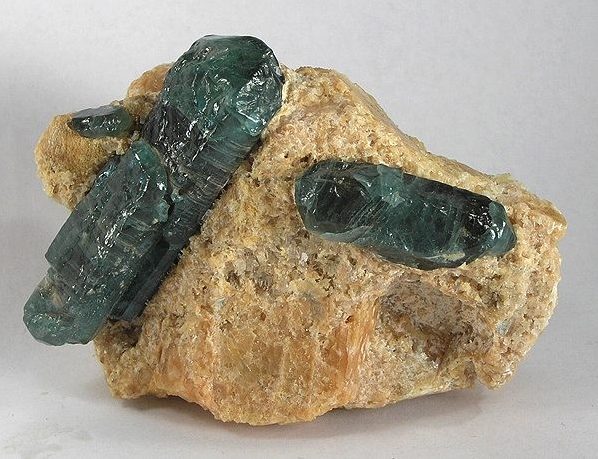
The hexagonal crystal system gives apatite its characteristic prismatic crystal form in nature, though chatoyant specimens are always cut as cabochons to maximize the eye effect. Refractive index of 1.632 to 1.646 is relatively high for a stone of this hardness.
Blue cat's eye apatite is genuinely rare within the already-uncommon category of chatoyant apatite. The blue to teal-blue color comes from rare earth element substitutions, and the specific alignment of inclusions needed for cat's eye is less common than in standard faceted apatite.
Madagascar is the primary source for fine cat's eye apatite of all colors; Sri Lanka and Brazil contribute additional material. The combination of blue color and cat's eye effect in the same stone is among the rarest configurations.
How Blue Cat's Eye Apatite Compares
| Property | Blue Cat's Eye Apatite | Chrysoberyl Cat's Eye | Blue Sapphire (Cat's Eye) |
|---|---|---|---|
| Hardness | 5 | 8.5 | 9 |
| Price / carat | $ Budget | $$ Mid-range | $$ Mid-range |
| Cat's Eye Effect | Soft, diffuse | Sharp, bright | Sharp, bright |
| Best For | Collector, pendant | Investment jewelry | Investment jewelry |
Meaning and Symbolism
Apatite as a mineral has no deep folk heritage in crystal traditions - it was scientifically named in 1786 from the Greek apatan (to deceive) because it was frequently confused with more valuable gems including topaz, olivine, and beryl.
This history of mistaken identity is occasionally referenced in modern crystal lore as giving apatite a tradition of revealing hidden truth. Blue apatite's throat and third eye associations build on this foundation of clarity and honest perception.
The cat's eye optical effect carries its own tradition across many cultures. In Sri Lanka and South Asia, cat's eye chrysoberyl has been prized as a protective amulet for centuries, with the moving light band interpreted as the eye of a guardian spirit.
Cat's eye apatite inherits this protective symbolism in modern crystal communities, though practitioners distinguish between apatite's softer, more accessible energy and chrysoberyl's more intense protective reputation.
Blue cat's eye apatite is associated in contemporary practice with focused communication, the ability to see clearly what has been obscured, and the integration of intellectual understanding with intuitive perception.
The moving eye effect is seen as symbolic of dynamic awareness - the capacity to shift perspective and perceive from multiple angles simultaneously. Practitioners use it for practices focused on cutting through confusion and accessing precise, honest communication.
Historical Timeline
Healing Tradition
Emotional
Practitioners believe blue cat's eye apatite supports intellectual and emotional clarity - the ability to see situations clearly without the distortion of wishful thinking or habitual reaction patterns.
It is said to help practitioners identify and articulate their truth with precision, making it useful for anyone in a period of important decision-making or communication.
Many crystal workers describe it as a stone of intellectual honesty combined with compassionate delivery - not blunt to the point of harshness, but clear in a way that serves genuine connection. The cat's eye optical effect is said to amplify this quality of dynamic, clear-sighted awareness.
Practitioners associate it with overcoming creative blocks rooted in self-doubt or fear of expressing genuine perspective.
Spiritual
In crystal healing tradition, blue apatite is associated with the throat chakra and third eye chakra. The cat's eye variety is said to intensify this dual association - the blue color opens the throat for honest communication while the moving optical effect amplifies third eye perception and dynamic awareness.
Practitioners use it in meditation practices focused on channeling, clear spiritual communication, and the integration of higher guidance into daily life decisions. The stone's association with apatite's identity as a 'deceiving' mineral is occasionally invoked in practices specifically designed to see through illusion and access deeper truth.
Physical
Practitioners note that apatite is biochemically the main component of human bone and tooth enamel, and some use this literal physical resonance as a basis for placing blue cat's eye apatite in wellness practices focused on skeletal health awareness.
Crystal wellness practitioners use it near the throat and forehead during sessions focused on communication and expanded perception. As with all crystal healing approaches, these are complementary practices - not medical treatments. The stone's visual and optical qualities make it a powerful meditative focal object regardless of specific healing intention.
Zodiac, Birthstone and Gifts
Gemini's air-sign communication mastery and dual-perspective awareness connect strongly to blue cat's eye apatite's throat and third eye associations. Practitioners suggest the stone amplifies Gemini's natural intellectual agility and communication gifts while adding a quality of depth and precision that cuts through the sign's occasional tendency toward surface-level cleverness.
Sagittarius's philosophical directness and commitment to truth resonate with apatite's namesake tradition of revealing what has been misidentified or concealed. Practitioners recommend blue cat's eye apatite for Sagittarius individuals who want to ensure their communication of truth is as clear and precise as their perception of it.
Care and Cleansing
Blue cat's eye apatite is Mohs 5 and sensitive to extended water, salt, and sunlight exposure. The blue color in apatite can fade with prolonged direct UV exposure. Brief water rinsing is acceptable but dry thoroughly immediately after - avoid soaking.
Salt can scratch the relatively soft surface and should be avoided entirely.
Sound cleansing is the most recommended method - gentle, effective, and safe for both the stone and its optical effect. Selenite plates work for daily charging. Moonlight cleansing on a dry protected surface is popular and aligns with the stone's intuitive and perceptive associations.
Smudging with sage or palo santo is fully safe when the stone stays dry.
- DO NOT expose to prolonged direct sunlight - blue apatite color can fade with extended UV exposure.
- DO NOT soak in water or salt baths - Mohs 5 is vulnerable to surface scratching and the color may be affected by extended moisture.
- DO store in a padded pouch or soft-lined box away from harder gemstones (topaz, sapphire, quartz) that will scratch the surface.
- DO NOT clean with ultrasonic or steam cleaners - the fibrous inclusions responsible for chatoyancy can be disrupted.
- DO set in protective bezel settings for jewelry use rather than prong settings that expose more surface area to abrasion.
- NOTE: the cat's eye effect requires specific viewing angles and a focused light source - demonstrate this to gift recipients.
Real vs Fake
Genuine cat's eye apatite shows a single, distinct band of reflected light that moves smoothly across the cabochon surface as the viewing angle changes. The band should be centered on the dome of the cabochon and have a characteristic silky quality - not a simple reflection but a diffuse, fibrous glow.
Under a single point light source, the effect should be clearly visible and responsive to rotation.
Glass or synthetic imitations can replicate the basic appearance but tend to show a cat's eye that is either too sharp (suggesting a metallic fiber inclusion rather than natural fibrous apatite) or too diffuse (suggesting a surface coating).
Natural apatite chatoyancy has a characteristic 'milky' quality to the eye band reflecting its fibrous inclusion origin. A refractometer reading of 1.632-1.646 confirms apatite over glass (1.52) or synthetic alternatives.
Heat treatment is sometimes used to enhance apatite color, including blue. This is not always disclosed but is difficult to detect without laboratory equipment. The more important identification step is confirming the cat's eye is natural - ask sellers specifically whether the chatoyancy is from natural inclusions.
Natural fibrous inclusions are the standard for collector-grade cat's eye apatite.
Blue Cat’s Eye Apatite Jewelry & Gifts
Blue cat's eye apatite is a mid-range specialty gem with prices reflecting rarity of both the blue color and the cat's eye effect. Quality cabochons typically sell for $20 to $80 per stone depending on size, color intensity, and sharpness of the eye.
Especially fine stones with vivid blue color and a sharp, centered eye can reach $100 to $200 for larger sizes from specialist gem dealers.
The key quality factors are eye sharpness (a well-defined, centered band versus a fuzzy or off-center one), color saturation (vivid teal-blue versus pale or gray-toned), and cabochon dome quality (a well-proportioned dome maximizes eye effect). The eye should move smoothly and symmetrically as the stone is rotated under light.
Pale or poorly formed eyes significantly reduce value.
Purchase from colored stone dealers or gemstone specialty shops rather than general crystal retailers. Madagascar is the most reliable source for fine cat's eye apatite including blue varieties.
Ask specifically about the chatoyancy quality before purchasing online - the eye effect must be clearly visible in the seller's photos to be considered for purchase.
Where to Buy Blue Cat’s Eye Apatite
Affiliate disclosure: Some links below earn us a small commission at no extra cost to you. See our affiliate disclosure page.
Handmade, raw, and tumbled pieces from independent sellers worldwide.
Shop Blue Cat’s Eye Apatite on Etsy →Accessories, tools, and specimen sets with fast Prime delivery.
Shop Blue Cat’s Eye Apatite on Amazon →Certified loose gemstones graded and photographed for online buyers.
Shop Blue Cat’s Eye Apatite on GemSelect →Pairs Well With


Where Blue Cat’s Eye Apatite Is Found


