
Bloodstone
A dark-green chalcedony dotted with red iron oxide spots, bloodstone is the traditional March birthstone of courage and sacrifice.
- Medieval Christian legend held that bloodstone's red spots were drops of Christ's blood that fell on green jasper at the Crucifixion.
- Roman legionaries carried bloodstone as battlefield amulets believed to preserve courage and stanch bleeding.
- Bloodstone is also known as heliotrope, a Greek name meaning sun-turning, from old beliefs about reflecting sunlight in water.
- Bloodstone is the traditional March birthstone alongside aquamarine in modern US birthstone lists.
- Scottish bloodstone from the Isle of Rum is a historically significant collector variety.
- March birthday gift seekers wanting the traditional stone alongside aquamarine
- Practitioners working with root chakra courage and sacrifice
- Readers drawn to dark green with natural red spotting and Christian heritage symbolism
- Collectors of chalcedony varieties and historically significant cabochons
- Gift givers shopping for warrior-themed or athletic achievement gifts
- Buyers wanting a bright faceted stone (consider peridot or emerald)
- Those who prefer uniform color (try chrysoprase or aventurine)
- Shoppers seeking rare investment value (consider jade)
What Is Bloodstone?
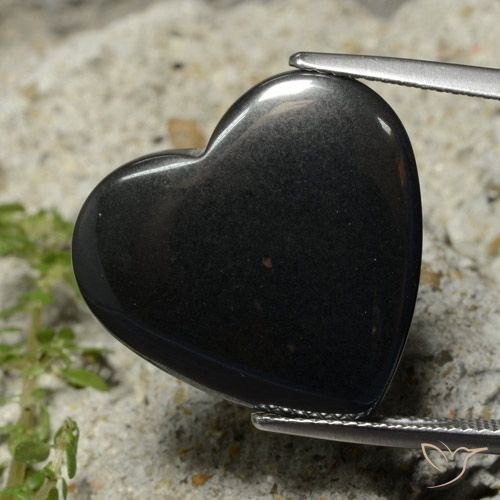
Bloodstone, also known as heliotrope, is a dark green variety of chalcedony (cryptocrystalline quartz) with scattered red spots of iron oxide, usually hematite. It rates 6.5 - 7 on the Mohs hardness scale.
The combination of dark green matrix and blood-red spotting gives the stone its dramatic appearance and evocative name, which has sparked many folk traditions across cultures.
At Mohs 6.5 to 7, bloodstone is durable enough for daily jewelry wear and is traditionally cut as cabochons, beads, intaglio seals, and carved cameos rather than faceted stones because its opacity scatters light.
The stone's traditional name heliotrope comes from Greek words meaning sun-turning, a reference to old beliefs that placing the stone in water would reflect the sun like drops of blood. Bloodstone forms in volcanic cavities alongside other chalcedony varieties when silica-rich groundwater deposits layers of cryptocrystalline quartz stained with iron minerals.
The major commercial sources are India (particularly the Deccan Traps), Brazil, Australia, China, Madagascar, Scotland, and the western United States.
Indian bloodstone from the Kathiawar region is the traditional source for most commercial cabochons, and Scottish heliotrope from the Isle of Rum is a historically significant collector variety.
How Bloodstone Compares
| Property | Bloodstone | Aquamarine | Jasper |
|---|---|---|---|
| Hardness | 6.5 - 7 | 7.5 - 8 | 6.5 - 7 |
| Price / carat | $ Budget | $$ Mid-range | $ Budget |
| Color | Green with red spots | Pale blue to teal | Earth tones, banded |
| Best For | Men's signet rings, cabochons | Fine jewelry | Cabochons, beads |
Meaning and Symbolism
Bloodstone has been valued across many cultures for its dramatic symbolism. Ancient Babylonians used bloodstone in seals and amulets, and Greek and Roman warriors carried it into battle as a talisman believed to stanch wounds and preserve courage.
The Roman tradition of carrying bloodstone in combat persisted into the medieval period, when European knights wore bloodstone rings during Crusades for similar reasons.
In Christian tradition, bloodstone acquired a powerful symbolic meaning. Medieval legend held that the red spots in the stone were drops of Christ's blood that fell on green jasper at the foot of the cross during the Crucifixion.
This association made bloodstone one of the preferred materials for carved religious seals, reliquaries, and rosaries during the Renaissance. The Blood of Christ bloodstone intaglios became a specialty of Florentine and Roman lapidaries from the 1400s onward.
In crystal healing tradition, bloodstone is associated with courage, sacrifice, and what practitioners call the strength-through-challenge archetype. It is traditionally the root chakra stone of enduring difficulty with grace, often recommended for people facing prolonged challenges or supporting others through medical or emotional crises.
It pairs naturally with aquamarine as a shared March birthstone and with red jasper as its chalcedony relative.
Historical Timeline
Healing Tradition
Emotional
Practitioners believe bloodstone supports emotional endurance through prolonged challenges. In crystal healing tradition, it is often recommended for people supporting a loved one through illness, navigating extended professional difficulty, or carrying family responsibilities during crisis periods.
Many readers wear bloodstone jewelry during caregiving seasons and describe a sense of steadied courage during demanding weeks. Practitioners pair bloodstone with rose quartz when the endurance work involves tender caregiving, or with black tourmaline for protective grounding alongside sacrifice.
Because its reputation is oriented toward sustained effort and sacrifice rather than quick transformation, bloodstone is often described as a caregiver's stone or a marathon-rather-than-sprint companion. Readers sometimes describe the stone as particularly resonant during family medical crises, long-term volunteer commitments, or ministry work.
Spiritual
Bloodstone is traditionally associated with the root and heart chakras, linking physical grounding with sacrificial love. Practitioners describe it as a stone of disciplined devotional practice rather than ecstatic states. In Christian tradition, bloodstone has long been used for rosary beads, prayer focus stones, and religious intaglios because of its Crucifixion symbolism.
Many readers keep a tumbled bloodstone on a meditation altar during Lent, Advent, or other seasons of devotional discipline, and some practitioners use small pieces in grids focused on endurance-related intentions.
It pairs readily with clear quartz for amplified devotional intention and with rose quartz for compassionate service work. The stone's combination of green earth with red sacrifice makes it a natural focus for meditation on grounded faith during difficult seasons.
Physical
Practitioners believe bloodstone supports what they describe as blood circulation, healthy energy during physical recovery, and general vitality during illness. Folk tradition from Roman times associates the stone with relief from bleeding wounds and stress-related fatigue, with modern crystal healing extending this to support during menstruation, pregnancy, and recovery from surgery.
In modern crystal healing practice, bloodstone is most often placed over the lower torso or worn as a pendant during active recovery.
Many readers wear bloodstone jewelry during athletic training, physical therapy sessions, or extended caregiving periods. It is not a substitute for medical care, and practitioners frame its role as supportive alongside proper treatment.
Because bloodstone is hard (Mohs 6.5 to 7) and chemically stable, it is practical for daily wear and can be worn in ring, pendant, or bracelet form without special handling.
Zodiac, Birthstone and Gifts
Bloodstone is the traditional March birthstone alongside aquamarine and is strongly associated with Aries and Pisces in Western astrology. Practitioners describe bloodstone as an ally for Aries's warrior temperament and for Pisces's sacrificial compassion.
In Vedic tradition, bloodstone is sometimes used as a substitute for red coral when coral is unavailable or outside budget, particularly for Mars-related birth chart work. The stone is typically set in silver or copper and worn on the ring finger of the dominant hand during Vedic practice.
Care and Cleansing
Bloodstone tolerates most common cleansing methods. Running lukewarm water for under a minute is safe, as is a gentle wash in mild soapy water with a soft brush for jewelry. Moonlight cleansing is traditional and safe. Sunlight cleansing is also appropriate because bloodstone color is stable under UV exposure.
Smoke cleansing with sage, cedar, or palo santo and sound cleansing with a singing bowl are both effective and carry no risk.
Dry salt cleansing on a bed of sea salt is fine, and saltwater soaks are acceptable for the stone but should be limited for jewelry to protect metal settings.
Ultrasonic and steam cleaners are generally safe for untreated bloodstone, though they should be used carefully on stones with visible cracks or surface fractures.
Because bloodstone is traditionally worn during periods of endurance and caregiving, many practitioners cleanse it after major challenges or extended demanding seasons rather than on a fixed schedule. A night on a selenite plate after caregiving periods is a common refresh practice.
- DO rinse bloodstone jewelry in warm soapy water and dry with a soft cloth.
- DO NOT soak bloodstone in harsh chemicals or acidic solutions.
- DO store bloodstone separately from harder stones to prevent surface scratches.
- DO use ultrasonic cleaners carefully on cracked or heavily included stones.
- DO ask about dyeing disclosure for suspiciously bright red spotting.
- DO preserve antique bloodstone intaglio provenance documentation.
- Note: bloodstone color is stable and does not fade with normal wear.
Real vs Fake
Genuine bloodstone shows a dark green base with irregular red spotting that feels natural and organic rather than mechanically uniform. Under a 10x loupe, the stone has a granular cryptocrystalline texture, and the red spots are typically small inclusions of hematite visible as discrete crystalline specks.
A stone with perfectly regular or geometrically spaced red spots is suspicious.
Common imitations include dyed chalcedony or agate (uniformly colored green base with artificially applied red dots), plastic composites with painted red spotting, and glass imitations with embedded colored fragments. Plastic and glass imitations are lightweight compared to genuine bloodstone. An acetone swab test can reveal dye transfer on dyed imitations.
A basic hardness test separates most imitations. Bloodstone scratches glass (Mohs 6.5 to 7) and resists steel in casual tests. Plastic and resin imitations are much softer and can be easily marked by a steel knife.
For antique Christian intaglios and carved religious pieces, provenance documentation is as important as material authentication. Reputable dealers of antique bloodstone cameos provide dating estimates and sometimes artist or workshop attributions. Modern commercial bloodstone is widely available at affordable prices and rarely fakedbecause the natural material is so inexpensive.
Bloodstone Jewelry & Gifts
Bloodstone is one of the most affordable traditional gemstones on the market. Tumbled stones cost a few dollars each, standard cabochons run $3 to $15 per carat, and large carved pieces or men's signet ring stones cost $15 to $100.
Antique bloodstone intaglios and religious reliquary pieces command significantly higher prices, with documented Renaissance and medieval Christian pieces reaching several thousand dollars at auction.
The main buying variable is quality of color and red-spot distribution. The classical ideal is a dark saturated green base with bright, well-distributed red spots rather than large bloody patches or pale green matrix. Some commercial bloodstone has its red color enhanced through heat or dyeing; this should be disclosed.
When buying, look at the stone under daylight and incandescent light, check the red spots for natural irregular distribution and discrete crystalline appearance, and ask about origin (India, Brazil, Australia, Scotland).
For men's signet rings, choose a protective bezel setting and buy from dealers who understand traditional bloodstone cutting. For Christian religious pieces, seek sellers with provenance expertise.
Where to Buy Bloodstone
Affiliate disclosure: Some links below earn us a small commission at no extra cost to you. See our affiliate disclosure page.
Handmade, raw, and tumbled pieces from independent sellers worldwide.
Shop Bloodstone on Etsy →Accessories, tools, and specimen sets with fast Prime delivery.
Shop Bloodstone on Amazon →Certified loose gemstones graded and photographed for online buyers.
Shop Bloodstone on GemSelect →Pairs Well With




Where Bloodstone Is Found


